Doppelbock: Light and dark liquid bread
Doppelbock is one of the strongest, maltiest traditional lager styles that is regularly brewed. Originating in southern Germany, it shares some characteristics with other German lagers, but most beers do not reach its strength. While many correctly think of this as a darker beer, there are also excellent paler versions that are quite enjoyable, albeit without the full depth of malt richness. Think of it as the difference between a dunkles bock and a helles bock, but with two percent more alcohol. “Doppel” means “double” in German, but it shouldn’t be taken literally (same idea as with double IPA).
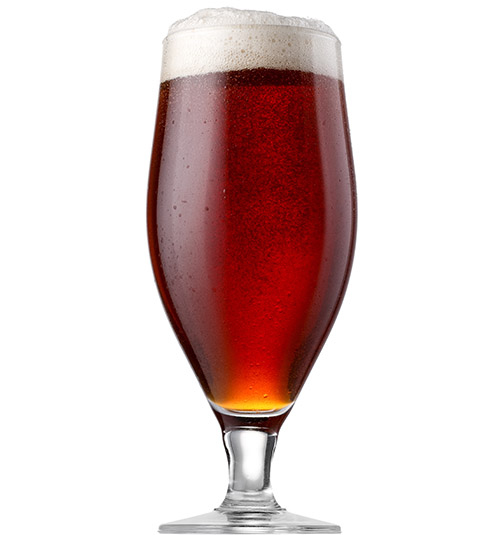
One of the stories told about doppelbock is that monks consider the beer to be “liquid bread” that can be consumed during the fasting of Lent. With the carbohydrates of malt and residual sweetness and the added calories of alcohol, doppelbock can conceivably sustain a healthy person for a short period of time, although those who tried this diet this century typically reported significant weight loss (you can search for and read those stories online from various local news sources). So, is this an actual story or a myth? Personally, I’m always suspicious of stories that sound just a little too good, but it is at least possible. Or at least it is enough to support the beer’s nickname.
“Bock” is also the German word for ram or billy goat, so there is often goat-like imagery associated with the style. This also leads some people to incorrectly assume that the male gender should be used since bock is masculine. However, people aren’t drinking goats; they are drinking bockbier, and bier (beer) has a neuter gender, so it is “das (bock)beer” not “der bock(beer),” if that makes sense.
The Beer Judge Certification Program (BJCP) Style Guidelines categorize Doppelbock as Style 9A in the Strong European Beer category, along with Baltic Porter and Eisbock. For competition purposes, the variation (pale or dark) should be identified to assist with judging. When purchasing doppelbocks, consumers should take note of the color in the bottle lest they be surprised.

History
As doppelbock is a stronger variation of bockbier, we logically need to start with the origin of that style. Bock (also known as dunkles bock or traditional bock) comes from the city of Einbeck in Lower Saxony in the northern part of Germany. Einbeck is about halfway between Dortmund and Berlin. Michael Jackson notes in New World Guide to Beer that bock has been produced in Einbeck since at least 1351.
Doppelbock is associated with the city of Munich in the state of Bavaria in the southern part of Germany. But bockbier from Einbeck did not arrive in Munich until the second half of the 1500s, at the earliest. The development of the stronger doppelbock is credited to the monks of Saint Francis of Paula, who settled in Munich after immigrating from southern Italy. Versions of the beer were documented as being made in 1634 in the Neudeck ob der Au Monastery, which is considered the founding date of Paulaner Brewery (named after their patron saint).
Paulaner’s first doppelbock, which they called Salvator (Savior in German), was made for consumption by the monks until it was first sold commercially in 1780. After a legal ruling in the 19th century held that only Paulaner could use the name Salvator, other breweries began adopting names ending in “-ator” for their doppelbocks, a tradition that is widely followed in Germany, the U.S., and elsewhere. Ayinger Celebrator, Spaten Optimator, and Tröegs Troegenator are some well-known examples. Knowledgeable beer enthusiasts will often assume the style of the beer simply when they see this type of name on a product.
Pale doppelbocks are a post-World War II creation, with many appearing since the 1990s. Eggenberg Urbock 23° was first made in 1970 in Austria, and is a strong example. Kulmbacher EKU 28 is a very strong pale lager that could be considered a pale doppelbock, if not a unique beer, and was first made in 1953. Darryl Richman, in his 1994 classic style series book on bock, simply mentions that pale doppelbocks are now appearing on the market. Certainly, the pale versions do not have the long history associated with Salvator.
Sensory Profile
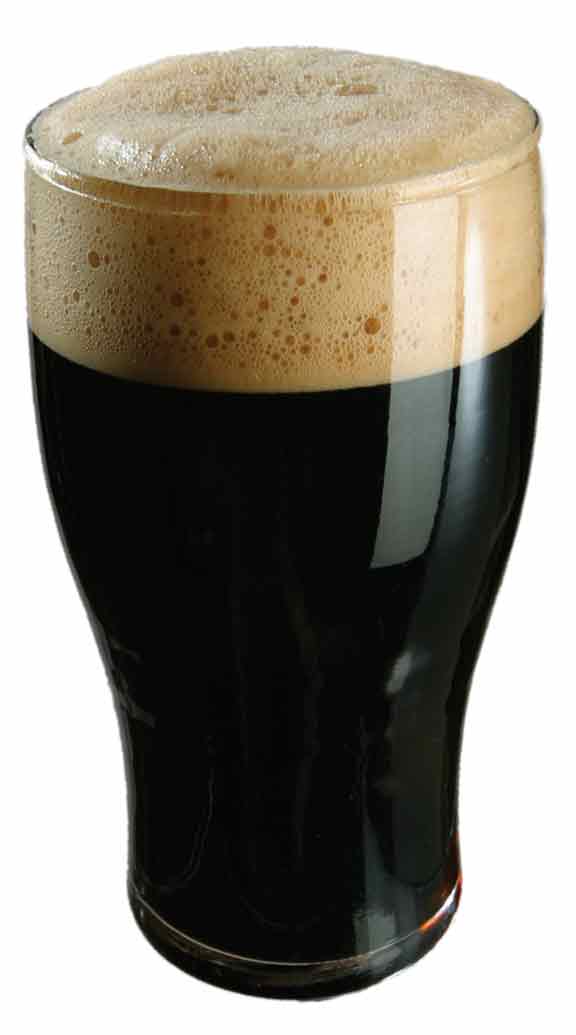
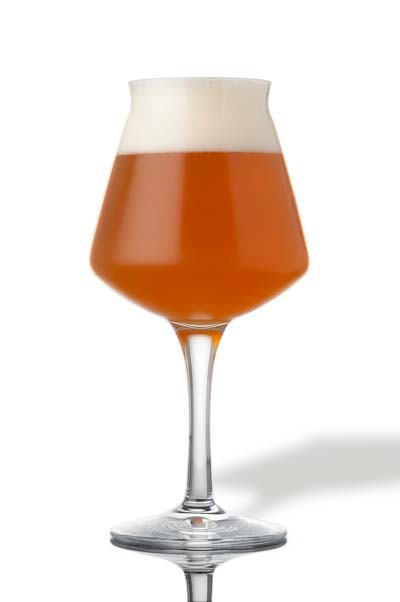
A doppelbock is a strong, richly malty German lager, with the dark version having a greater depth and richness of malt flavors than the lighter versions. The dark examples are a deep copper to dark brown color, often showing reddish highlights, while the pale versions are deep gold to light amber in color. Darker versions usually have an off-white head, while pale versions have a white head.

The darker color doesn’t come from roasted malts, so don’t expect any burnt or roast flavors, except perhaps a faint chocolate note. Flavors associated with Munich-type malts (including dark Munich malts) dominate, with their strong Maillard product flavors imparting richness and depth (a character often amplified by decoction mashing). Flavors are deeply toasty and bready, less so in the pale version. Some caramel flavors are often noted, but as a deeper enhancement to the toasty, bready notes, not a primary flavor. Dark versions often have some dark fruit character like plums, dark grapes, or fruit leather, while pale versions may have a light floral, spicy, or herbal hop flavor.
The alcohol strength should be at least 7%, and can range up to 10% perhaps (which is one reason I tend to think of the pale 11% EKU 28 as a bit of a unique product, like the dark 14% Samichlaus). The alcohol strength is often felt as a light warmth, but shouldn’t burn or be tasted. The rich, medium-full to full body and malty finish helps temper the impression of alcohol.
The balance of doppelbock is always malty, and may seem fairly malty-sweet on the palate, but the finish should seem attenuated if not outright dry. Paler versions can have a drier finish. The impression of sweetness often comes from the medium-low to medium bitterness that allows the rich malt flavors to dominate. The carbonation is medium to medium-low, which can also allow body to be appreciated. The smooth lager character further enhances this impression.
The pale versions will not have the same malt richness nor darker malt and fruit flavors as the dark variants, as these flavors are derived from the same malts used to give the beer color. The paler versions will seem a bit drier and more bitter, as can be found in helles bock, and may have a bit more hop flavor. The slight change in balance and addition of hops compensates for the absence of the deeper malt and fruit flavors.
Brewing Ingredients and Methods
As a Bavarian beer, doppelbock is made according to Reinheitsgebot traditions using only barley malt, hops, yeast, and water. German brewing tradition is to make this style with a decoction mash, although modern German practices have largely replaced this method with step infusion schedules. Historically, Germans would have used no more than a double decoction mash.
The grist is usually heavy in the Munich and dark Munich malt, but other malts are common. Pilsner and Vienna malts can be used to cut the richness of the Munich malt. Medium crystal malts can be used to add more depth to the sweetness and bring in some additional dark fruit flavors. Aromatic malt can be used to boost the malt presence. Decoction mashes are traditional, but I’ve also made this style with an infusion mash, usually with a corresponding bump up in dark Munich and aromatic malts. Avoid heavily toasted or roasted malts.
Hops are usually just in the bittering, with German noble hops the common choice. A clean bittering hop like Magnum is also a good choice. Low mineral water or water with a light amount of chlorides is fine; anything that isn’t heavy in carbonates and sulfates should work. The yeast should be a clean and neutral lager strain with low sulfur production. White Labs WLP833 (German Bock) — and the comparable limited release Wyeast 2487-PC (Hella Bock) — yeast is a natural choice as it emphasizes the rich and malty flavors, but other clean German lager yeasts — Wyeast 2124 (Bohemian Lager), White Labs WLP830 (German Lager), SafLager W-34/70, or Wyeast 2206 (Bavarian Lager) also work well.
A normal German lager fermentation schedule should be followed, fermenting around 50 °F (10 °C), then lagering for a couple of months at near-freezing temperatures. German tradition was to lager one week for every degree Plato of original gravity, so four or five months is not out of line. Modern practice is to accelerate this schedule, possibly by kräusening. However, I also think when you have an 8 or 9% beer that more time will help smooth out the alcohol.
Homebrew Example
I’ve been making variations of this recipe for nearly 30 years, and it consistently delivers. I learned decoction mashing when making the first iteration of this recipe, so it has a special place in my heart. When I make traditional German lagers, I tend to go old school on my methods since it feels like the extra effort shows respect. I also don’t like doppelbocks that taste like I’m drinking a can of malt extract, so I shoot for a rich, malty flavor on the palate with a smooth texture, while finishing a little dry to encourage another drink.
To respect the classics, I’m using a grist heavy on Munich and dark Munich malts and a double decoction mash. Layering crystal malts helps give the darker fruit flavors and a bit of residual sweetness, but using Pilsner malt for part of the base counters this effect. I’m using just a touch of a huskless roasted malt to adjust the color and give it a hint of chocolate. The decoction mash can give deeper color on its own, but not really that extra flavor. I’m recommending the Ayinger yeast strain, which is a low-sulfur producer and really brings out the maltiness in beers.
Hops are simple, just a bittering addition that could be any German noble hop, really. The water should be a low mineral profile with just a bit of calcium chloride to enhance the malty finish. Note that I also use older methods of lagering, preferring an extended near-freezing conditioning to help smooth out the palate, clean up any yeast byproducts, and allow the alcohol time to integrate. You can prime and bottle condition, although I usually carbonate it in the keg using a lower PSI setting for an extended time to give a creamier texture and a finer carbonation.
When tasting the beer, pay attention to the finish to see if the alcohol is too noticeable. The malt flavors should always be dominant, but if the alcohol is too strong, just age it longer. Also, you probably want to drink this at a slightly warmer temperature than your typical lagers (perhaps 50 °F/10 °C), as colder temperatures tend to reduce the malt impression on the palate.
Further Reading . . .
• Lesser known than Oktoberfest, Munich’s spring beer festival Starkbierfest (Strong Beer Festival) is every bit as fun. We take you inside the festival and share advice from some of Munich’s great brewers on creating a doppelbock fit for Starkbierfest.
• There are a number of challenges to brewing high-gravity lagers, and a number of approaches as well. We asked four American craft brewers who have nailed the doppelbock style for their advice to the toughest questions.
Doppelbock
(5 gallons/19 L, all-grain)
OG = 1.089 FG = 1.019
IBU = 20 SRM = 21 ABV = 9.4%
Ingredients
6.5 lbs. (2.9 kg) Pilsner malt
5 lbs. (2.3 kg) dark Munich malt
4 lbs. (1.8 kg) Munich malt
1 lb. (0.45 kg) Carapils® malt
1 lb. (0.45 kg) CaraMunich® III malt
1 lb. (0.45 kg) CaraVienne or Belgian Cara 20 malt
8 oz. (227 g) CaraBohemian® or Belgian Cara 200 MD malt
2 oz. (57 g) Carafa® II Special malt
3.5 AAU Crystal hops (60 min) (1 oz./28g at 3.5% alpha acids)
4.5 AAU Tettnang hops (60 min) (1 oz./28g at 4.5% alpha acids)
White Labs WLP833 (German Bock Lager), Wyeast 2487-PC (Hella Bock), or SafLager W-34/70 yeast
3⁄4 cup corn sugar (if priming)
Step by Step
This recipe uses reverse osmosis (RO) water and a decoction mash. Adjust all brewing water to a pH of 5.5 using phosphoric acid. Add 1 tsp. of calcium chloride to the mash.
Mash in Pilsner and Munich malts at 144 °F (62 °C) and rest for 20 minutes. Pull one-third of the thick portion of the mash, and boil in a separate pot for 15 minutes, stirring often. Return the decoction to the main mash to hit 154 °F (68 °C) (if you undershoot this temperature, increase the temperature manually), then rest for 45 minutes. Pull a thin decoction and boil for 10 minutes in a separate pot. Add remaining malts to the main mash, remix the decoction with the main mash, and stir to hit 170 °F (77 °C). Begin recirculating, and rest at this mashout temperature for 20 minutes while recirculating. Sparge slowly with 170 °F (77 °C) water, collecting 6.5 gallons (24.5 L) of wort.
Boil the wort for 90 minutes, adding hops at the times indicated in the recipe.
Chill the wort to 48 °F (9 °C), pitch the yeast, allowing temperature to rise to 50–52 °F (10–11 °C), and ferment until complete. Rack and lager for eight weeks at 32 °F (0 °C).
Rack the beer, prime and bottle condition, or keg and force carbonate.
Doppelbock
(5 gallons/19 L, extract with grains)
OG = 1.089 FG = 1.019
IBU = 20 SRM = 21 ABV = 9.4%
Ingredients
4 lbs. (1.8 kg) Pilsner liquid malt extract
6 lbs. (2.7 kg) Munich liquid malt extract
1 lb. (0.45 kg) Carapils® malt
1 lb. (0.45 kg) CaraMunich® III malt
1 lb. (0.45 kg) CaraVienne or Belgian Cara 20 malt
8 oz. (227 g) CaraBohemian® or Belgian Cara 200 MD malt
2 oz. (57 g) Carafa® II Special malt
3.5 AAU Crystal hops (60 min) (1 oz./28g at 3.5% alpha acids)
4.5 AAU Tettnang hops (60 min) (1 oz./28g at 4.5% alpha acids)
White Labs WLP833 (German Bock Lager), Wyeast 2487-PC (Hella Bock), or SafLager W-34/70 yeast
3⁄4 cup corn sugar (if priming)
Step by Step
Heat 6.5 gallons (24.5 L) of water in the brew kettle to 158 °F (70 °C). Steep the grains in a mesh bag for 30 minutes, then remove, rinsing lightly.
Turn off the heat. Add the malt extracts and stir thoroughly to dissolve completely. You do not want to feel liquid extract at the bottom of the kettle when stirring with your spoon. Turn the heat back on and bring to a boil.
Boil the wort for 60 minutes, adding hops at the times indicated.
Follow the remainder of the all-grain recipe.