From Pot to Podium
In 2019, a blonde ale I named Chargie was my very first attempt at homebrewing. Today, that same blonde ale holds an achievement I could never have imagined when I brewed that first batch: A gold medal-winning beer at the 2026 World Beer Cup and the title of Best Blonde Ale in the World.
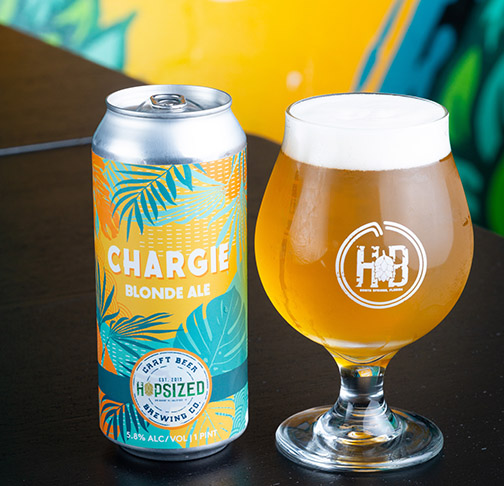
My first batch of Chargie included malt extract and grains. At the time, I knew very little about water profiles or recipe development. My goal was simply to complete a brew day from beginning to end and understand the process. The resulting beer was mediocre at best, but the experience accomplished something much more important — it made me want to understand why beer turns out the way it does.
I dove into brewing science, particularly water chemistry and mineral profiles. I had started with a small MoreBeer! brewing kit, but by my second batch of Chargie, I had already upgraded to an Ss Brewtech 20-gallon (76-L) electric brewing system.
Batch number two was an entirely different experience. First, Chargie became an all-grain beer. I maintained precise mash temperatures, continuously recirculated the mash for the full hour, and sparged for the first time. That batch went on to win second place in a homebrewing competition.

From there, I resisted the temptation to constantly reinvent the recipe. Instead, I made small, deliberate changes, learning from each batch and dialing in the beer one variable at a time. I entered it into homebrew competitions throughout our area and it repeatedly took first place.
Eventually, my wife, Ana Rodriguez de Vera, and I decided to turn our passion into a career by opening Hopsized Brewing Company in Bonita Springs, Florida. Only four months after opening our doors, we entered Chargie and two other beers into a statewide brewing competition. All three won gold, helping Hopsized earn the title of Best Small Brewery in Florida for 2023. We continued entering Chargie in subsequent years and continued earning medals.
One challenge I had feared — scaling a homebrew recipe to a professional brewhouse — proved surprisingly straightforward. Using BeerSmith, we scaled Chargie to our professional Ss Brewtech system while maintaining the recipe’s percentages and ratios. That allowed us to preserve the character of the original beer while brewing it consistently at commercial scale. We continue using BeerSmith today.
In 2026, we decided to put Chargie on the biggest stage and entered it into the World Beer Cup. When Chargie was awarded gold, recognizing it as the world’s best blonde ale, it was an incredible full-circle moment. The beer that began as a mediocre extract plus grains batch in my home had become a world champion.
My background as a full-time practicing physician has influenced how I approach brewing. Science is central to our recipe development, water chemistry, and brewery microbiology program. I also enjoy digging deeply into hop selection — understanding oil composition, survivable compounds, and how individual varieties contribute specific aromas and flavors.

If Chargie’s journey has taught me anything, it is that great beer comes from understanding the why behind every ingredient and process. Clean brewing practices and meticulous cold-side sanitation can produce good beer. Thoughtful recipe development can make it better. But understanding your grains, hops, fermentation, and water can take a beer from good to great — and perhaps even from an introduction to homebrewing to the best in the world. For me, that progression represents years of curiosity, experimentation, consistency, and willingness to keep learning with every brew.