Adjusting beer pH
Q. Should I ever change the pH of finished beer? If so, what should it be, and what should I use to adjust it?
From Mr. Wizard Live
Mr. Wizard says . . .
The word should brings with it nuanced implications. Most people will agree that we all should routinely bathe. However, when my wife says, “Hey Ashton, you should take a shower,” there is usually a reason behind the statement. Your question about beer pH leaves me scratching my head a bit because it sounds like something went wrong that prompted it. I’ll leave that stone unturned!
Beer pH depends on mash properties, including water chemistry and the many malt components that influence wort pH, hopping rate and timing, wort boil duration, yeast strain, ingredients added during fermentation, such as hops and fruit, and sometimes bacteria that are intentionally or accidentally present in the fermenter. Beyond setting the stage, most brewers don’t actively control beer pH once yeast is pitched.
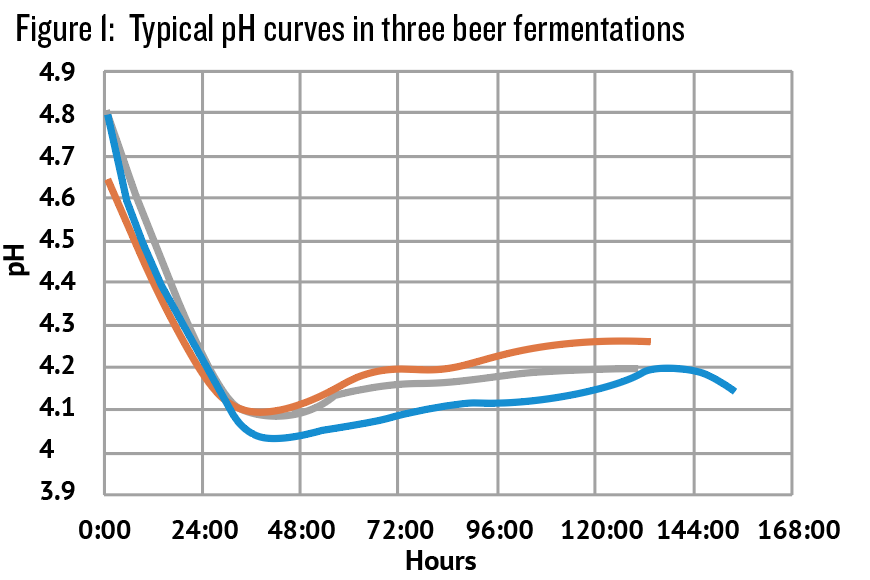
It’s normal for pH to drop from about 5.0–5.2 to 4.0–4.5 within the first 48 hours of fermentation. When beer pH is continuously monitored, a common trend is a slight increase after the initial drop to a value that typically remains stable during and after fermentation. The pH curves shown in Figure 1 (borrowed from this article by Amy Todd) illustrate these changes during three different fermentations.

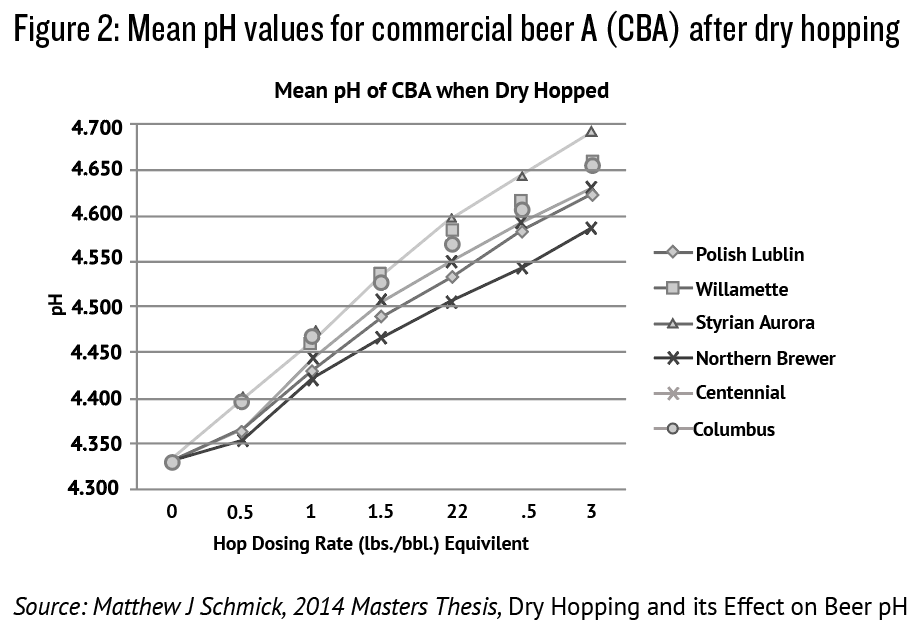
There are some cases where pH increases more significantly than the typical blips shown in Figure 1. Dry hop additions are arguably the most common reason beer pH increases above about 4.5 after fermentation begins. Figure 2 shows the effect of six different dry-hop additions ranging from 0–3 pounds of hops per barrel of beer (0–1.5 oz./gallon or 0–11.6 g/L) on the pH of a commercial beer sample. Matthew Schmick’s 2014 master’s thesis contains similar data for four commercial beer samples. Five of the six hop varieties used in the trials shown in Figure 2 resulted in beer pH values greater than 4.6 at the upper end of the dosing range. I’ll come back to this later.
In extreme cases where beer is aged on heavy yeast loads, autolysis can increase beer pH because amino acids released from yeast cells tend to buffer beer upward. However, autolysis is also associated with the proliferation of lactic acid bacteria because these fastidious bacteria grow best when amino acids are readily available, and competition from yeast for these nutrients is low. A reduction in beer pH following fermentation is typically caused by bacterial contamination, often from the pitching yeast itself and only apparent weeks or months after pitching when the conditions are best.
Contrary to the advice commonly found on homebrewing forums, I believe yeast should be removed once fermentation is complete. Racking into a clean vessel, sometimes called a secondary fermenter or lagering vessel, is one reliable method of yeast removal. Purging from the bottom of cone-bottom fermenters is another very reliable option for brewers fortunate enough to have these fancy fermenters.
Aside from the effects of hops and yeast, fruit additions are another factor that commonly influences beer pH. Because fruits contain organic acids such as malic and citric acids, fruit additions typically reduce beer pH.
Now it is time to bring these concepts together into a coherent discussion. In food microbiology, pH 4.6 is a critical threshold because foods with a pH below this value are classified as high-acid foods, while those with a pH above 4.6 are classified as low-acid foods. This distinction is based on the behavior of Clostridium botulinum, a spore-forming pathogenic bacterium capable of producing a potent and potentially fatal neurotoxin. Under favorable conditions, dormant spores can germinate and develop into vegetative cells that produce the toxin. However, C. botulinum spores cannot germinate and grow in foods with a pH below 4.6. As a result, producers of high-acid foods can make safe products without the severe heat treatments required for low-acid canned foods, where preventing botulism is a primary food safety concern. This is one of the many reasons brewers can jump up and down and sing with joy!
Circling back to your original question: Should you ever adjust the pH of your finished beer? The answer is yes, under certain circumstances. When a finished beer has a pH greater than 4.6, acidification can be used to reduce the pH below this important food safety threshold. In practice, however, few commercially produced heavily dry-hopped beers are acidified after fermentation, and many beers currently on the market exceed pH 4.6. Although there have been no documented cases of pathogenic bacteria causing illness in commercially produced beer, brewers should remain aware of the potential risk associated with elevated pH. It is also worth noting that many foodborne pathogens can grow in foods with a pH below 4.6. Clostridium botulinum receives special attention because of the severity of botulism and the widespread occurrence of its spores in nature.
Let me ask myself a question on your behalf: Hey Ashton, when would you adjust pH after fermentation? Beer pH, like cider and wine pH, influences flavor balance. Post-fermentation pH adjustment is a lever that brewers do not typically pull because, in the long run, it is usually easier to make pH adjustments before fermentation by adding acid before or after wort boiling. However, for one-off batches, acid additions after fermentation are another tool in the brewer’s toolbox.
Organic acids also bring flavors of their own and can act like amplifiers for other flavor compounds. For example, a beer with citrus-like hop character can be perceived as containing lime juice when citric acid is added. Similarly, malic acid can accentuate apple-like aromas and flavors. Even additions of balsamic vinegar can add another layer of complexity to an otherwise garden-variety kettle sour.
As for what pH to target, there is no universal answer because the ideal value depends on the beer style and the flavor profile you are trying to achieve. If the goal is simply to move a beer below pH 4.6, small additions of food-grade lactic or phosphoric acid are commonly used. If the goal is flavor adjustment, I recommend proceeding cautiously and making additions in measured increments because relatively small changes in pH can noticeably affect beer flavor and balance.