Trillium Brewing Co.’s UPPER CASE clone
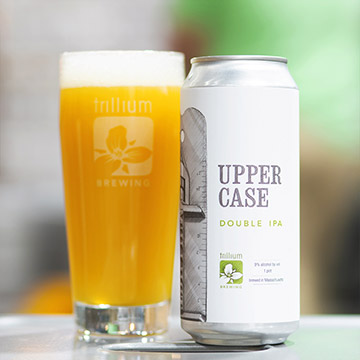
Trillium Brewing Co.’s UPPER CASE clone, All-Grain
(5 gallons/19 L, all-grain)
OG = 1.083 FG = 1.015
IBU = 65 SRM = 6 ABV = 9%
This big double IPA is dangerously smooth, hiding its 9% ABV behind massive Mosaic®, Citra®, and Galaxy® dry-hop additions that contribute overripe mango, pineapple, and passion fruit aromas. The impression of tropical fruit leads into the flavor profile which is layered further by white wine, pine resin and grapefruit zest. Like many of Trillium’s hazy IPAs, no hops are added until the whirlpool stage.
Ingredients
15.2 lbs. 6.9 kg) North American 2-row malt
1.2 lbs. (0.5 kg) white wheat malt
14 oz. (400 g) flaked wheat
0.25 oz. (7 g) Mosaic® hops (whirlpool)
0.25 oz. (7 g) Citra® hops (whirlpool)
7 oz. (200 g) Mosaic® hops (dry hop)
7 oz. (200 g) Citra® hops (dry hop)
3.2 oz. (90 g) Galaxy® hops (dry hop)
1 g Whirlfloc (15 min.)
Wyeast 1318 (London Ale III), White Labs WLP066 (London Fog), Imperial Yeast A38 (Juice), or LalBrew Verdant IPA yeast
¾ cup corn sugar (if priming)
Step by step
This recipe uses a “soft water” profile. If you have high total alkalinity or high mineral content water, dilute back with reverse osmosis or distilled water. Add back small quantities of calcium chloride and gypsum at a 5:1 ratio.

Add all of the crushed grains to the mash tun and perform a single-infusion mash at 156 °F (69 °C). Mash out and collect 6.5 gallons (24.5 L) of wort in the boil kettle. Boil for 60 minutes. Add the Whirlfloc in the last 15 minutes.
When the boil is complete, adjust pH to 5.0 with lactic acid, if necessary. Chill wort to 180 °F (82 °C) and add the whirlpool hop addition. Stir wort to create a whirlpool and then allow it to settle for 10 minutes before cooling wort to 66 °F (19 °C).
Oxygenate wort (if using liquid yeast) and pitch yeast. Ferment at 66 °F (19 °C) until fermentation is complete. Within 24 hours of reaching terminal gravity, turn off any temperature control to ensure the yeast stays active and add the dry-hop additions. Open a fresh package of hops to ensure the best possible quality.
Cold crash after bioconversion is validated via a sensory panel, usually within 48–72 hours. Rack off of the hops into a keg and carbonate to 2.55 volumes.
Plan to cold condition at 30 °F (-1 °C) for at least 14 days (21 days is better). Do not move or disturb the keg. Pour out trub from the faucet every two days starting at day 7 in the keg until no more is pulled through.
Extract option:
Replace the grains with 8.25 lbs. (3.75 kg) light dried malt extract and 1 lb. (0.45 kg) wheat dried malt extract. Bring 6 gallons (23 L) of water to a boil and then turn off the heat. Stir in the malt extracts until fully dissolved, and then return to the heat. Boil the wort for 60 minutes. Add the Whirlfloc in the last 15 minutes.
When the boil is complete, adjust pH to 5.0 with lactic acid, if necessary. Chill wort to 180 °F (82 °C) and add the whirlpool hop addition. Stir wort to create a whirlpool and then allow it to settle for 10 minutes before cooling wort to 66 °F (19 °C).
Oxygenate wort (if using liquid yeast) and pitch yeast. Ferment at 66 °F (19 °C) until fermentation is complete. Within 24 hours of reaching terminal gravity, turn off any temperature control to ensure the yeast stays active and add the dry-hop additions. Open a fresh package of hops to ensure the best possible quality.
Follow the conditioning protocol from the all-grain recipe.