Keeping Your Yeast Healthy
As a professional brewer I am often asked for homebrewing advice or to sample and critique homebrewers’ wares. Most often I am quite impressed with the talents of our local homebrewers and find the quality of their beers comparable to commercial examples. Every once in a while I taste one that has gone awry, and the most common problem associated with those beers is a lack of attention to what I feel is the most important and underestimated ingredient in beer: yeast.
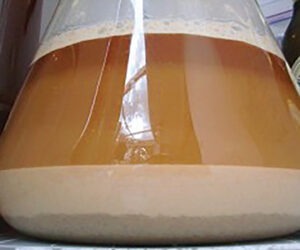
Yeast is a carbon-based lifeform just like you and me and has many of the same requirements for a healthy, productive life. Your efforts to feed and take care of your yeast will reward you with consistently better beer. Exercise your yeast, give it plenty of fresh air, and feed it a balanced diet.
Exercise simply means use it or lose it. If you picked up a fresh pitch from the brewery downtown but left it in the refrigerator for a month, it might be time to re-culture or make another trip to the brewery. Your yeast is no longer fit to sustain a healthy fermentation, and off-flavors will likely result from autolyzed (dead) yeast. You could also suffer a stuck fermentation even though you pitched what seemed like plenty of yeast.
The problem is one of viability. Optimally a brewer should pitch a slurry with as close to 100 percent viability, or live cells, as possible.
Vitality is also an issue. Yeast might be alive but in poor condition if nutritional requirements are not met. Be sure to pitch fresh yeast, supply it with plenty of oxygen at the beginning of fermentation, and supplement with nutrients if you brew high-gravity beers or brew with a high percentage of adjuncts.
Perhaps the most important yeast nutrient is molecular oxygen. Without oxygen, the growth of new yeast cells is limited, which results in inferior, slow, or incomplete fermentations. The addition of oxygen is critical when the yeast is to be re-pitched into successive batches. The results of oxygen deficiency become most apparent after several batches when yeast viability and vitality decline, often resulting in autolysis, stuck fermentations, increased diacetyl (buttery flavor), and high levels of esters (fruity flavor).
Assure that the wort is cool before aerating it and pitching the yeast, because the solubility of oxygen decreases with an increase in temperature. Oxygen solubility is also inversely proportional to wort density. When fermenting strong worts, you need greater aeration. This is because oxygen is less soluble in a high-gravity wort and yeast needs more oxygen to ferment a strong wort.
While too little oxygen prompts reduced viability and vitality, too much oxygen can cause nutrients to be expended in excessive yeast growth rather than the production of alcohol. But I have yet to hear of a case of over-oxygenation by a homebrewer, since most homebrewers do not have the means to inject pure oxygen into their wort. To aerate your batch, shake or rock the fermenter until a dense foam head appears on the surface of the wort. Some homebrewers use an aquarium pump with a sterile air filter and aquarium aeration stone, but great care must be taken when employing this method because of the risk of contamination.
During the aerobic growth stage at the beginning of fermentation, yeast cells use oxygen for the synthesis of cell membrane constituents such as fats and sterols. Without oxygen, yeast growth is limited, and defects become apparent in the final product.
Components that are responsible for the metabolism of nutrients and the building of new cell-wall material could build up within the cell rather than being excreted. This causes higher levels of esters.
As much as they need oxygen, yeast need vitamins and minerals. Read the label on a bottle of vitamin B. Chances are, the source of vitamins is brewer’s yeast, and in fact yeast is one of the few food sources to contain nearly all of the B-complex vitamins. Go ahead and pop a vitamin B for yourself: it may prevent a hangover. As for your brew kettle, give it some brewer’s yeast. A tablespoon should be enough for a five-gallon batch. At our brewery we put a pitcher of yeast in every 50-barrel brew at the beginning of the boil. If you don’t have fresh yeast available to put in the kettle, any yeast-nutrient packet will serve well. Most yeast-nutrient packets are simply fortified, dried brewer’s yeast.
Healthy yeast contains within its cell walls all of the nutrients it needs to survive for a short time in stasis. When yeast is boiled in the kettle the nutrients are released for the next generation. Those nutrients include amino acids, which are a source of assimilable nitrogen, and vitamins such as niacin, thiamin, pantothenate, riboflavin, folic acid, pyridoxine, and biotin. Yeast also contains minerals such as potassium, iron, copper, zinc, phosphorous, magnesium, and calcium. Calcium and magnesium ions also come from brewers’ salts and brewing water and aid in yeast flocculation (clumping and sinking). All of the nutrients in yeast are thermo-stable, even though the yeast cells themselves will be killed in the boil.
Most of these same nutrients are also found in malt, along with carbohydrates, or fermentable sugars. Those sugars include maltose, maltotriose, glucose, sucrose, and fructose and are broken down by enzymes within the yeast cell wall during fermentation.
Fermentable sugars are the primary carbohydrate for the production of alcohol and carbon dioxide.
Wort is the principal source of all nutrients for yeast and contains B vitamins, amino acids, carbohydrates, and minerals from barley. Additional minerals are supplied from brewing water and brewing salts. In a normal fermentation all of the nutrients the yeast needs are supplied in the wort without any requirement for supplementation.
Supplements become increasingly important in stronger worts as the oxygen, nitrogen, fatty acid, and sterol requirements of the yeast increase. Supplements are also important when a high carbohydrate fraction is used, as when brewing with sugars, honey, rice, corn, or other adjuncts. Addition of these adjuncts proportionately decreases the concentration of amino acids and other nutrients in the wort while increasing the carbohydrate levels.
Essentially, in high-gravity brewing or when brewing with adjuncts, a brewer is asking the yeast to do more with less. Therefore, it becomes imperative to supplement with yeast or yeast nutrients in the kettle boil and to properly aerate the cooled wort to assure that all nutritive requirements are available to your pitching yeast.
When brewing barley wines, bocks, or other high-gravity beers, supplementation is recommended. High-gravity beers often create a problem with alcohol toxicity for yeast, but supplementation may increase yeast’s tolerance to ethanol.
Strong worts also cause increased pressure in cells (through osmosis) due to a high concentration of sugars, and this may cause the yeast to autolyze. However, with proper nutrition and oxygenation, most yeasts will still be able to sustain a normal fermentation.
Supplementation and increased oxygenation help yeast remain healthy and viable even under adverse conditions. Oxygen has been found to be the most significant nutrient in high-gravity worts. Even in an all-malt wort in which all the nutrients have been provided, the yeast cannot fully use those nutrients unless there is sufficient oxygen to initiate optimal yeast growth.
In a wort of average gravity brewed from malt or malt extract, all of the nutrients needed to sustain a healthy ferment and viable, re-pitchable yeast cells are in the wort. All you need to do is brew. Supplementation of vitamins or nutrients above that required by the yeast does not lead to further yeast growth or better fermentations.
Brewers might need to supplement worts with high carbohydrate levels and reduced nitrogen levels, as is the case when brewing with adjuncts. Yeast or yeast-extract nutrient packets in the kettle assure that there are enough nutrients available, but when brewing medium-gravity beers such as pale ales from all malt, there’s no need to supplement.
I tell visitors at my brewery that my boss is a single-cell fungus and my job is simply to feed it. So go brew and feed your fungi. You’ve been doing it all along.