An Emerging Paraguayan Beer Style
Let’s explore Paraguay, a country in South America where a new trend is on tap in the world of craft beer, the aptly named “Paraguayan ale,” or sometimes simply “Paraguayan beer” as there are also lager versions. It’s exciting, fun, and bringing a lot of breweries together as they try to establish a style representative of our beautiful country.

I am the Head Brewer of a microbrewery called Cerveceria Singular (a Spanish word that denotes peculiarity, but loses meaning when translated to English) located in the city of Asunción, capital of Paraguay. Although Singular primarily brews farmhouse ales, we also make this new Paraguayan ale style. As a passionate brewer committed to spreading beer culture, as well as a member of our nation’s craft and homebrewer association (ACERVA PY), I believe this new style is worth sharing with brewers around the world. And as homebrewers, I believe readers of Brew Your Own may be excited to learn about a potentially new-to-them beer style with a flavor combination worth exploring.
To put this style in context, tereré is the national beverage of the Republic of Paraguay, and a tangible piece of cultural heritage recognized internationally by UNESCO. Tereré consists of an infusion of cold water (different from mate, which is hot and is also consumed in various South American countries) with yerba mate and various local herbs and flavorings including lemongrass, orange peel, and many others. Most of the herbs and flavorings have medicinal use, principally by the indigenous tribes.
Tereré is a stamp of the Paraguayan identity, but what does that have to do with beer? Recently, commercial brewers and homebrewers in Paraguay have been making some delicious beers with the same ingredients, adding these local herbs in the mash or during fermentation.

Can a country create a new style of beer? Well, that would be a long and divisive debate, which will not be the focus of this article, but that indubitably, for the foreigner visiting Paraguay, will call attention to the quantity of taps listed as “Paraguayan ale” or “Paraguayan lager” in various bars.
A Little Bit of History
As a newer style, it is not too difficult to trace where the first Paraguayan ale was born.
The originators of this beer were the Stanley brothers of Cerveceria Herken, and the day they first brewed this experimental beer happened to be on a day when I was visiting the brewery. Augusto, one of the four brothers and brewers of Herken, told us that they started homebrewing in 2014 before formally starting the business. “We would buy a kit of an American pale ale with hops from over there (the U.S.) of course, or a Czech lager with Bohemian malts and Czech Saaz hops, and we asked ourselves, what if we make a beer with Paraguayan ingredients? We try to use local ingredients not just to keep costs down but also to have our own identity.”
They tried many ingredients, from local orange peel to a large variety of herbs and local varieties of wood. Finally, they opted to make a blonde ale base with local herbs to maximize the freshness, using cassava (Manihot esculenta) flour, a classic and almost unavoidable element of Paraguayan cuisine, as one of the pillars of the grain bill, in addition to an herb mix added in the whirlpool.
Initially, Herken bottled their Paraguayan ale and added a sprig of lemongrass inside. The refreshing flavor of lemongrass was something that Paraguayans were already accustomed to as it is almost always added to infusions of tereré.
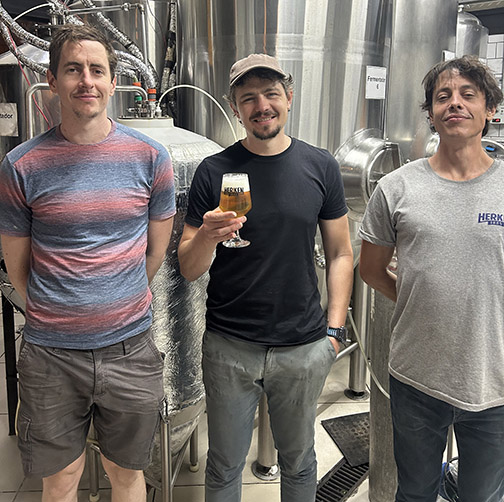
Augusto stated that at the beginning, customers were very surprised to find lemongrass leaves when pouring the bottle into a glass. The beer was the front-page story in two newspapers during that time, with one headline reading, “New Beer Made From a Base of Cassava With Lemongrass Leaves.”
With respect to the use of cassava, Cerveceria Herken worked with chemistry students at the National University of Asunción to optimize the use of that ingredient and to see the power of extraction/fermentability of cassava flour. “The values were approximate to a malt base like Pilsen malt,” says Augusto.
Augusto didn’t patent or register anything related to the new beer because, he says, he wanted to incentivize the use of local ingredients among other brewers. “It was only a matter of time before someone in Paraguay did it and we were lucky to be the first,” he says with a smile.
Worth mentioning, as tereré was a large influence on this beer style, is that yerba mate was included in many early examples. However, its flavor in beer is similar to making a toasted herbal syrup, which isn’t at all pleasant and Paraguayan ale examples rarely include it today.
Gaining Steam Among Other Brewers
We have several well-known Paraguayan ales now regularly available including options from Herken, Churro Campaña from Sacramento Brewing Co., Paraguayan Ale from The Hop, ParaguayIPA from Beerkingos (which is a hoppier version of the style).
Other popular versions include Churro Pantano at Sacramento Brewing Co., and a collaboration brew between Cerveceria Singular (where I am the Head Brewer) and Cerveceria Pinoza with the beer called Ida Y Vuelta (a clone recipe for this beer is on page 28). This recipe was formulated together and both breweries begin with the same wort but ferment it in their respective brewery with their own house yeast strains. “Ida” means “to go” and “vuelta” means “to return.” The taps at both breweries are labeled Ida Y Vuelta, but generally at Singular it is ordered as Ida while at Pinoza it goes by Vuelta.
At Simon Dice Brewery, Francisco Montanaro, Head Brewer and Administrator, and President of our brewers association ACERVA PY, commented that when he was first getting started in the world of craft beer he found the Paraguayan beer from Herken, “and immediately I wanted to make my own version.”
In addition to brewing one at Simon Dice, Francisco previously worked in other breweries where he also produced this style in their production lines. Differently from Herken, which produces an ale, Simon Dice’s Paraguayan beer is a light lager with a small amount of hops, where in place of adjuncts such as corn or rice they use cassava starch and treat the herbs as if they were dry hopping, bringing a peculiar freshness to the beer.
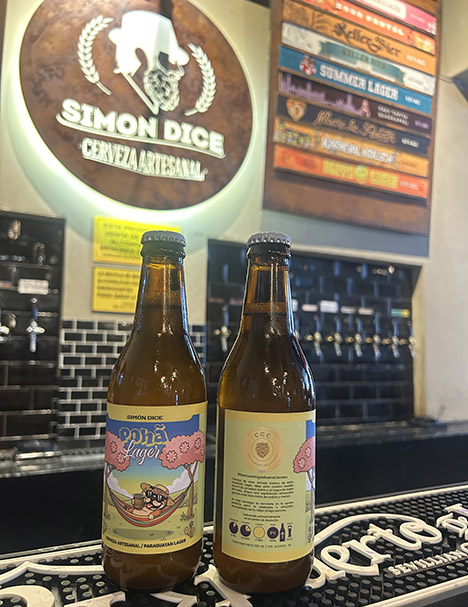
“It’s everything that a Paraguayan could want and is accustomed to in its sensory profile,” said Francisco with laughter.
When the style started spreading among brewers, Francisco said all the brewers in Paraguay wanted to add the Paraguayan beer style as an addendum to the provisional styles in the Beer Judge Certification Program’s Style Guidelines. With time, he and other brewers realized that should not be the focus, but instead attention should be turned to create a greater awareness of this type of beer so it can reach more consumers. As an association, myself and other brewers decided to add Paraguayan beer as a style in the competitions that we hold annually, to provide better visibility for all of the participants. From various meetings, style guidelines for Paraguayan beer entered in competitions were established by ACERVA PY members — guidelines that are followed to this day.
The guidelines offer a lot of flexibility, but there are some particular characteristics that should be adhered to, summed up here:
• It may be an ale or a lager.
• It is blonde in color and light.
• Includes cassava as an ingredient.
• Includes other local herbs of Paraguay.
A Singular (Unique) Recipe
If you’re starting to think this beer style may be difficult to replicate outside of Paraguay with limited access to many of these herbs, don’t worry as there is plenty of flexibility here and substitutions can be made. We get it, and are used to the degree of difficulty in brewing beer styles from the other side of the world. It is a headache when we want to brew an Australian sparkling ale in Paraguay with Cluster or Pride of Ringwood hops, or to make a Czech lager with Bohemian malt and the classic Czech Saaz hops, just to cite a couple of examples we do make but have to sometimes compromise on available ingredients. If the herbs that Paraguayan brewers use, like menta’i (Mentha piperita), Paraguayan lemongrass, and other varieties, lemongrass with a touch of mint will be close enough to emulate the beer.
In most parts of the world you can buy cassava (or yuca, another name for it) flour or tapioca starch (tapioca starch is a starch extracted from the cassava root, whereas cassava flour is made from the entire root after it is dried and ground to a powder). It may cost you more than we are accustomed to, but if you can find it, you have everything necessary to start brewing a Paraguayan-style beer. Just add a small amount of rice hulls to avoid a stuck sparge because the flours outside of Paraguay are often very fine, which can cause problems. But with care, these can fulfill their use. Cassava flour will contribute up to 20% of the grain bill.
A classic Paraguayan beer should be light, refreshing to drink, and dry thanks to the cassava flour, giving a thin body and a neutral note that is difficult to explain. The yeast should offer a clean fermentation and harmonize with the freshness of the herbs. The hop character generally is low so as to not compete with the other ingredients. Noble hops are an ideal choice, as are American Cascade, Centennial, or even Amarillo® to complement the flavor, but keep their use restricted to the whirlpool — you aren’t looking to turn this into an overly hoppy beer.
As far as malts are concerned, the variety and proportion should usually be simple. A great place to start is with the base of an American blonde ale, but replace the Pilsen malt with cassava flour (15–20%), ignore the caramel malts and instead use something like Munich or Vienna malt (about 10%), or a small amount of Victory® (3–5%) to balance things out. There are versions here in Paraguay that employ that grain bill.
In the brewery where I work, we usually use something similar to the above grain bill. Some of the very rich malted notes, with the light toastiness of cookie, can compete with the herbs. Another option is to think about making an American light lager, Kölsch, or English golden ale with light bitterness.
The recipe from Cerveceria Singular and Cerveceria Pinoza offers more information about ingredient selection and how we brew this beer, though there is a lot of room for interpretation in this style.
Cerveceria Singular & Cerveceria Pinoza’s Ida Y Vuelta clone

(5 gallons/19 L, all-grain)
OG = 1.044 FG = 1.008
IBU = 20 SRM = 3 ABV = 4.8%
This is Cerveceria Singular’s most award-winning beer, winning many gold medals at regional competitions in the categories of “Paraguayan Beer” and “Spiced & Herb.” The recipe was created in collaboration with Cerveceria Pinoza and both brew the recipe using their own house yeast. “Ida” means “to go” and “vuelta” means “to return.” The taps at both breweries are labeled Ida Y Vuelta, but generally at Singular it is ordered as Ida while at Pinoza it goes by Vuelta.
Ingredients
7.2 lbs. (3.3 kg) Pilsner malt
7 oz. (200 g) wheat malt
1.4 lbs. (0.6 kg) cassava flour
4 AAU Centennial or Amarillo® hops (60 min.) (0.4 oz./11 g at 10% alpha acids)
0.6 oz. (17 g) Centennial or Amarillo® hops (5 min.)
0.3 oz. (9 g) orange peel
0.3 oz. (9 g) lemongrass
SafAle US-05, White Labs WLP001 (California Ale), or Wyeast 1056 (American Ale)
¾ cup corn sugar (if priming)
Step by step
Mash all of the grains at 149–151 °F (65–66 °C) for 60 minutes. Mash out at 168 °F (76 °C), sparge grains with enough water to collect 6.5 gallons (24.5 L) in the kettle. Boil for 75–90 minutes to avoid potential off-flavors from the Pilsner malt, like Dimethyl Sulfide (DMS).
Obtain a bitterness of 15–17 IBUs in the first hop addition at 60 minutes remaining in the boil, and the final hop addition should contribute the other 3-5 remaining IBUs late in the boil. Depending on the variety of hops used, this will usually be half a gram or one gram per liter (0.67 oz. in 5 gallons) added with 5 or 10 minutes remaining in the boil.
I usually use Centennial or Amarillo® hops depending on availability, but a noble hop variety like Saaz will also work. Remember that the flavor protagonists are the herbs.
After turning off the flame, add the orange peel and lemongrass and stir to create a whirlpool. Allow to sit for 20 minutes and then cool and transfer to the fermenter.
We usually use SafAle US-05 yeast, but any flavor-neutral yeast strain will function well.
If you’re lacking enough of the herbal and refreshing notes of the lemongrass, create a tincture with just enough vodka to cover the lemongrass. Leave it overnight, no more because it will oxidize, and add with a dropper to your preferred taste when the beer is ready to be packaged.
Further Reading …
• This isn’t the only beer style that uses Cassava. To supplement traditional base grains, a brewer in Barbados shares how they use cassava in their brews.