
Beer Musings From Japan
In a recent business trip to Japan, I had the opportunity to dig into two topics that have become increasingly popular among U.S. craft brewers: Adjuncts and sake.
Brewing with Rice
As someone who has worked in multiple areas of the U.S. brewing industry for the last 35 years, including brewing, education, consulting, equipment design and fabrication, raw material supply, and journalism, I have long been puzzled by the animosity many craft brewers have toward adjuncts. I clearly remember sitting in a Brewers Association (BA) member meeting at the 2006 Craft Brewers Conference in Seattle, Washington, when the newly minted definition of a craft brewery was discussed.
Instead of simply declaring that all U.S. brewers except for the big boys, breweries with more than 25% ownership by one of the big boys, and foreign-owned breweries qualified as craft brewers, the BA created an elaborate set of rules that essentially accomplished the same thing. Perhaps the most divisive part of the definition concerned adjuncts. While the BA embraced traditional brewing, the definition asserted that using adjuncts to lighten flavor was not traditional. This meant that one of the nation’s oldest traditional breweries, August Schell, was not considered a craft brewer because its traditionally brewed lagers used adjuncts. This goofiness was eventually corrected through a softer craft brewer definition, but not before craft brewers did a bang-up job convincing consumers that “adjuncts are bad; adjuncts are very bad.”
The irony is that Japanese-style and Mexican-style lagers are now popular among many U.S. craft brewers, and that dated “adjuncts = bad” messaging has largely been replaced by the opposite. If you are thinking about pursuing brewing professionally, or are already making your living in this world, I offer three words of advice: Never say never.

There are many intriguing facets of craft brewing in Japan, but one of the most interesting to me is the way brewers view adjuncts such as rice and corn starch. Because rice is a staple of the Japanese diet and is held in high regard as an important crop, Japanese craft brewers do not seem to carry the same ingrained bias against its use in brewing. And because homebrewing is not permitted under Japanese tax law, there has been significant knowledge transfer from the large Japanese brewers, specifically Asahi, Kirin, Sapporo, and Suntory, to the craft brewing community. As a result, Japanese craft brewers tend to view adjuncts simply as another set of ingredients available for use. It also means that adjunct cookers and decoction mashing are relatively common because the large Japanese breweries have historically relied on both methods.
Time to climb out of this rabbit hole!
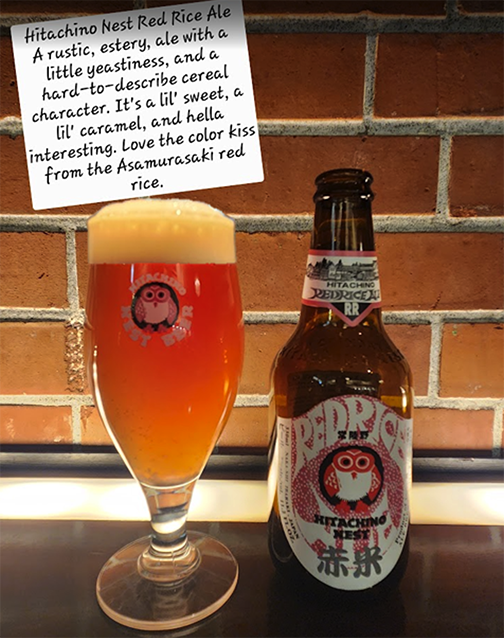
On my most recent trip to Japan, I once again enjoyed Hitachino Nest Red Rice Ale, brewed with Asamurasaki red rice as a key part of the grist. What makes this beer especially interesting is that the rice contributes both color (as seen in the earlier image) and flavor. I also visited a craft brewery that not only has a dedicated cereal cooker, but uses corn starch instead of rice because rice is expensive and corn starch is an excellent adjunct when the goal is to produce a delicate flavor profile without the added step of rice milling.
Sake Beer
In the United States, we are beginning to hear more about “sake beers.” I use quotation marks because these are not yet a well-defined beer style. These beers are often brewed with ingredients associated with sake production, such as sake yeast and koji, steamed rice inoculated with Aspergillus oryzae, the mold used to convert rice starch into fermentable sugars.
I was fortunate to be gifted a few cans of Flor Fermentation’s Mizuha during a visit to the brewery. This very tasty, higher-alcohol beer is named after Mizuhanome-no-Kami, the goddess of water, and is brewed with koji from Yasui Sake Brewery, a historic sake brewery in Koka City, Shiga Prefecture.

Another sake beer I was fortunate to sample at the brewery in Kobe was Paint Palette’s Timeless Symphony, brewed with lemongrass and sake kasu, the mixture of rice solids, yeast, and residual sake removed from moromi after fermentation is complete. Paint Palette collaborated with Kobe Shushinkan, a highly regarded local sake brewery best known for its
Fukuju sake.
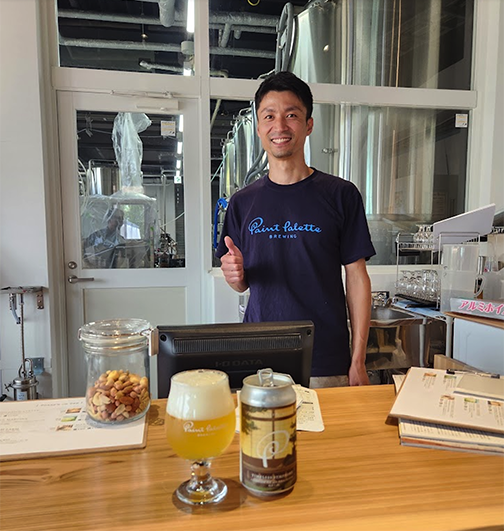
I don’t normally taste beer before lunch, but this one was too good to resist, and I happily finished the entire can. Fortunately, I enjoyed a hearty breakfast that morning.
My message to homebrewers is simple: Keep coloring outside the lines. Explore rice cultivars that contribute more than starch to wort and consider incorporating elements of sake production such as sake yeast, koji, and sake kasu into your brewing if you have
access to them.
And to the U.S. craft brewers reading this, continue embracing all brewing ingredients for the opportunities they provide to express creativity and keep today’s fickle consumers interested in craft beer. Kampai!


