Saison Recipes From Around the World
“Do you think the farmers ordered saison yeast from a yeast lab 100 years ago?”
This is my favorite quote from Yvan de Baets of Brasserie de la Senne, in Brussels, Belgium.
I’ve had the privilege of brewing with many of Belgium and France’s premiere saison/farmhouse brewers and my takeaway from what I’ve learned from them over the years, in a nutshell, is yeast does not a saison/farmhouse ale make.
The process, the ingredients, your equipment and time (the most expensive ingredient) all come into play as much as the yeast you select. Using a Belgian blonde recipe and only changing the yeast to a “saison” strain will give you a decent beer, but not necessarily a saison

The breweries chosen in this clone package of the diverse saison style represent Belgium (De Ranke, Cazeau) France (Thiriez) and the U.S. (Fermentory Form, Little Animals, Scratch) for a broad view of interpretations. De Ranke is known for hop-forward beer in Belgium and their Saison de Dottignies coming in at 45 IBUs reflects that.
Thiriez is a bit more esoteric in their overall approach, although their Étoile du Nord clocks in at a well hidden and incredibly well integrated 55 IBUs. Cazeau and Scratch lean into the time-honored practice of adding herbs, flowers, and other agricultural products to subtly complement but not overwhelm. Fermentory Form and Little Animals are more “New School American” changing up the malt origin and hop varieties while still maintaining tradition. They all add up to great saisons and great beer overall.
Before we get to the recipes, though, here are some of my own general guidelines:
You’re brewing a Belgian/Wallonian style, so first and foremost, use ingredients from the region. Dingemans, Castle, Soufflet, Franco-Belge are maltsters of choice, with Pilsner generally being the base malt. Use large amounts of noble (or noble equivalent) hop varieties contributing in the neighborhood of 25–40+ IBUs, rather than lower amounts of higher alpha acid hop varieties. Dry hop if you’d like, but stick to noble-type varieties. Use soft(ish) water, and an appropriate yeast, although it doesn’t have to be a “saison” yeast and doesn’t need to be liquid. I know several very well-known Belgian breweries that use dry yeast or a combination of different dry yeasts. It should be a diastatic yeast as most farmhouse styles beg for dryness (though several yeast labs now offer non-diastatic saison yeasts that also ferment to dryness). Shoot for a final gravity near 1.000, but anything under 1.010 is perfectly acceptable.
Personally, I like to have 5–10% unmalted wheat, rye, or malted wheat to give head retention a fighting chance in a beer this dry, but it’s not always necessary unless you add a wild culture along with your yeast of choice. A single-
step infusion mash is all that’s necessary, but a few of the recipes I’ve chosen have stepped mash instructions. Mash low — in the low-to-mid-140s °F (low 60s °C).

I recommend starting fermentation at the lowest end of the yeast’s range and ramping up to the high 70s °F (mid 20s °C). You “can” go much higher, but as they say, “results may vary.” You’ll get plenty of farmhousey esters and phenolics at the lower temperatures. A second or third generation yeast will always get better results.
The less pressure on the yeast the better. This goes for fermenter geometry and head pressure. Five gallons (19 L) in a 10-gallon (38-L) flat bottom fermenter is ideal. If using carboys, consider dividing 5 gallons (19 L) between two 5-gallon (19-L) vessels if possible and skip the airlock until fermentation slows (loosely cover the hole though).
Primary fermentation works well, but extended aging in secondary or the bottle, or both, does wonders for building complexity.
Lastly, it is my opinion that you should always bottle or keg condition saison. If you go the bottling route, be sure to use bottles rated for higher pressures. These styles beg for high volumes of natural carbonation. Typically 3–4.5 volumes of CO2. Plain table sugar works very well and is the priming sugar of choice across Belgium. Being Europe, it’s usually beet sugar, but cane sugar works just as well — it’s sucrose either way. BYO has a great priming chart that can be found here.
Following are recipes from six of the best. Some you may recognize and some you may not, but all are legends in my farmhouse story. Some leave room to make your own decisions around yeast (as most of these breweries use a proprietary house strain and did not provide recommendations) but that lends them open to your own interpretation.
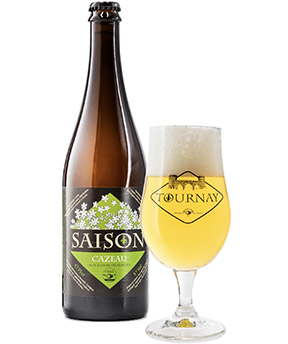
Brasserie De Cazeau’s Saison De Cazeau clone, All-Grain
(5 gallons/19 L, all-grain)
OG = 1.045 FG = 1.007
IBU = 25 SRM = 3 ABV = 5%
Brasserie de Cazeau is what everyone imagines when they think of a Belgian farmhouse brewery. Located in Templeuve, Belgium, near the French border, the building and brewery ooze with character. The building dates from 1753 and is in the classic farmhouse style of the region. Brewing has been done on premises, off and on, over the centuries. The current custodian, Laurent Agache, revived the brewery and residence in 2004 after his grandfather ceased brewing in 1969.
Their “Tournay” line of traditional Belgian styles is what they are best known for in Belgium, but their real gem is Saison de Cazeau. A seemingly simple saison brewed with elderflowers that is amazing in its depth and complexity. I’ve always equated elderflowers with Grandma’s house. Aromas of cedar, old perfume, and old books. An absolute stunning beer.
Ingredients
9.2 lbs. (4.2 kg) Dingemans Pilsner malt
3.8 AAU Cascade hops (60 min.) (0.75 oz./21 g at 4.5% alpha acids)
18 AAU Hallertau Blanc hops (5 min.) (2 oz./56 g at 9% alpha acids)
10 oz. (280 g) fresh elderflowers (Cazeau uses fresh or frozen from fresh) or 5 oz. (140 g) dried elderflowers
Saison or farmhouse yeast of your choice
1 cup corn sugar (if priming)
Step by step
Mash Pilsner malt at 145 °F (36 °C) for 45 minutes. Mash out at 170 °F (77 °C) and collect 7 gallons of wort. Boil 90 minutes, adding hops at times indicated. When the boil is complete, remove from heat and stir in the elderflowers. Cool to 62 °F (17 °C) and pitch yeast. Allow to free rise to no warmer than 76 °F (24 °C).
When fermentation is complete, rack, add priming sugar, and bottle or condition in a keg, allowing to carbonate at room temperature for two weeks prior to cooling.
Brasserie De Cazeau’s Saison De Cazeau clone, Extract
(5 gallons/19 L, extract only)
OG = 1.045 FG = 1.007
IBU = 25 SRM = 3 ABV = 5%
Ingredients
5 lbs. (2.3 kg) Pilsner dried malt extract
3.8 AAU Cascade hops (60 min.) (0.75 oz./21 g at 4.5% alpha acids)
18 AAU Hallertau Blanc hops (5 min.) (2 oz./56 g at 9% alpha acids)
10 oz. (280 g) fresh elderflowers (Cazeau uses fresh or frozen from fresh) or 5 oz. (140 g) dried elderflowers
Saison or farmhouse yeast of your choice
1 cup corn sugar (if priming)
Step by step
Heat 6.5 gallons (24.5 L) of water to a boil and then turn off heat. Stir in the malt extract until completely dissolved and then return to heat. Boil 60 minutes, following the remainder of the all-grain recipe.
When the boil is complete, remove from heat and stir in the elderflowers. Cool to 62 °F (17 °C) and pitch yeast. Allow to free rise to no warmer than 76 °F (24 °C).
When fermentation is complete, rack, add priming sugar, and bottle or condition in a keg, allowing to carbonate at room temperature for two weeks prior to cooling.
Pro Tip:
“Dry hopping” with additional elderflowers would be a good way to get even more elderflower character in an already great beer, if you desire even more.
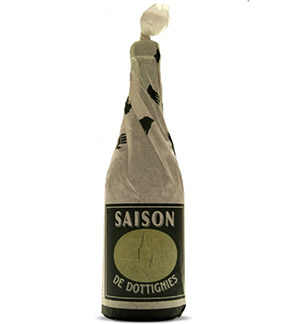
Brasserie De Ranke’s Saison de Dottignies clone, All-Grain
(5 gallons/19 L, all-grain)
OG = 1.050 FG = 1.006
IBU = 45 SRM = 4 ABV = 5.5%
Brasserie de Ranke helped bring back bitterness and hops to Belgian beer. Their XX Bitter, Guldenberg, and Pere Noël set a new standard for what Belgian beer could be — or more correctly, what it once was. Founded by Nino Bacelle and Guido Devos in 1997, De Ranke focuses on hop-forward traditional ales. De Ranke uses only whole cone hops, preferably from the hop farms nearest to Dottignies where they are located. If you are unable to source whole cone hops, pellets can be substituted. The name “De Ranke” refers to the hop bines themselves. The brewery has a diverse line in terms of Belgian breweries, ranging from barrel-fermented kriek, to porter, to XXX Bitter, a bigger version of the legendary XX Bitter.
Ingredients
7.9 lbs. (3.6 kg) Dingemans Pilsner malt
2.3 lbs. (1 kg) pale ale malt
6.8 AAU Brewer’s Gold hops (60 min.) (0.75 oz./21 g at 9% alpha acids)
3.4 AAU Fuggle hops (60 min.) (0.75 oz./21 g at 4.5% alpha acids)
2.1 AAU Northern Brewer hops (60 min.) (0.3 oz./8 g at 7% alpha acids)
1 oz. (28 g) Styrian Golding hops (whirlpool)
Belgian ale yeast
1 cup corn sugar (if priming)
Step by step
This recipe uses a step mash. Begin with a 20-minute rest at 127 °F (53 °C). Ramp temperature up to 145 °F (63 °C) and rest there for 50 minutes. Raise temperature to 163 °F (73 °C) and rest for 20 minutes. Mash out and collect 7 gallons (26.5 L) of wort and boil for 90 minutes. Add hops at times indicated. When the boil is complete, turn off heat and give the wort a stir to create a whirlpool and then add the Styrian Golding hops. Cover and let rest for 15 minutes, then cool to 62 °F (17 °C) and pitch yeast. Allow to free rise to no warmer than 76 °F (24 °C).
When fermentation is complete, add priming sugar and bottle or condition in a keg, allowing to carbonate at room temperature for two weeks prior to cooling.
Brasserie De Ranke’s Saison de Dottignies clone, Extract
(5 gallons/19 L, extract only)
OG = 1.050 FG = 1.006
IBU = 45 SRM = 4 ABV = 5.5%
Ingredients
4.5 lbs. (2 kg) Pilsner dried malt extract
1 lb. (0.45 kg) pale ale dried malt extract
6.8 AAU Brewer’s Gold hops (60 min.) (0.75 oz./21 g at 9% alpha acids)
3.4 AAU Fuggle hops (60 min.) (0.75 oz./21 g at 4.5% alpha acids)
2.1 AAU Northern Brewer hops (60 min.) (0.3 oz./8 g at 7% alpha acids)
1 oz. (28 g) Styrian Golding hops (whirlpool)
Belgian ale yeast
1 cup corn sugar (if priming)
Step by step
Heat 6 gallons (23 L) of water to a boil and then turn off heat. Stir in the malt extracts until completely dissolved and then return to heat. Boil 60 minutes, adding hops at times indicated. When the boil is complete, turn off heat and give the wort a stir to create a whirlpool and then add the Styrian Golding hops. Cover and let rest for 15 minutes, then cool to 62 °F (17 °C) and pitch yeast. Allow to free rise to no warmer than 76 °F (24 °C).
When fermentation is complete, add priming sugar and bottle or condition in a keg, allowing to carbonate at room temperature for two weeks prior to cooling.
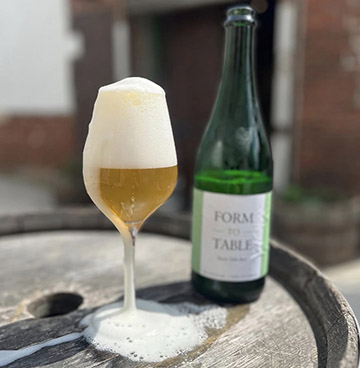
Fermentory Form’s Form To Table clone, All-Grain
(5 gallons/19 L, all-grain)
OG = 1.030 FG = 1.003
IBU = 36 SRM = 4 ABV = 3.5%
Fermentory Form is a small artisan brewery in the West Kensington neighborhood of Philadelphia, Pennsylvania, that specializes in farmhouse-style ales using their own mixed cultures and oak barrel aging. Located down an unassuming alley, they are only open a few days per week. You’ll know they’re open when the light outside their doorway is on. Fermentory Form falls squarely in the “American Farmhouse” category by barrel aging to give just a bit of wild yeast character and complexity.
Ingredients
5.2 lbs. (2.4 kg) Weyermann Vienna malt
1.3 lb. (0.6 kg) Weyermann wheat malt pale
8 AAU Brewer’s Gold hops (90 min.) (1 oz./28 g at 8% alpha acids)
0.75 oz. (21 g) Willamette hops (whirlpool)
1 oz. (28 g) Styrian Golding Celeia hops (dry hop)
Your favorite mixed culture Belgian farmhouse yeast
1 cup corn sugar (if priming)
Step by step
Mash grains in 1.6 gallons (6 L) of water at 147 °F (64 °C) for 60 minutes. Mash out and collect 7 gallons (26.5 L) of wort and boil 90 minutes, adding the Brewer’s Gold hops at the start of the boil. Add the whirlpool addition when the boil is complete and give the wort a stir to create a whirlpool, then let settle for 20 minutes.
Cool the wort to 70 °F (21 °C) and pitch yeast.
When fermentation is complete, add priming sugar and bottle or condition in a keg, allowing to carbonate at room temperature for two weeks prior to cooling.
Fermentory Form’s Form To Table clone, Extract
(5 gallons/19 L, extract only)
OG = 1.030 FG = 1.003
IBU = 36 SRM = 4 ABV = 3.5%
Ingredients
2 lbs. (0.9 kg) golden dried malt extract
1 lb. (0.45 kg) wheat liquid malt extract
10 oz. (280 g) Munich dried malt extract
8 AAU Brewer’s Gold hops (90 min.) (1 oz./28 g at 8% alpha acids)
0.75 oz. (21 g) Willamette hops (whirlpool)
1 oz. (28 g) Styrian Golding Celeia hops (dry hop)
Your favorite mixed culture Belgian farmhouse yeast
1 cup corn sugar (if priming)
Step by step
Heat 6.5 gallons (24.5 L) of water to a boil and then turn
off heat. Stir in the malt extracts until completely dissolved and then return to heat. Boil 60 minutes, adding hops at times indicated.
Add the whirlpool addition when the boil is complete and give the wort a stir to create a whirlpool, then let settle for 20 minutes.
Cool the wort to 70 °F (21 °C) and pitch yeast.
When fermentation is complete, add priming sugar and bottle or condition in a keg, allowing to carbonate at room temperature for two weeks prior to cooling.
Little Animals Beer Project’s Saisonolatry clone, All-Grain
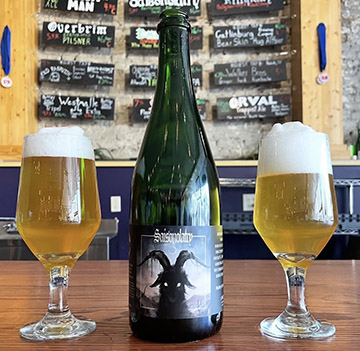
(5 gallons/19 L, all-grain)
OG = 1.048 FG = 1.002
IBU = 38 SRM = 3 ABV = 6%
Little Animals Beer Project was (and will be again soon) located in Johnson City, Tennessee, and specializes in saison and other Belgian styles, always leaning toward tradition. Chris Cates, Owner and Head Brewer, came along with me to Belgium in 2022 where we brewed collaborations with Brasserie de la Senne and the legendary Fantôme, absorbing everything and bringing it all back to Little Animals Beer Project. Chris is a big proponent of dry yeast and blending two or more dry yeasts to get just the profile he intends, as called for in this recipe.
Saisonolatry is a traditional saison. Chris gives pointers for modifying to your taste and preference if you so choose.
Ingredients
7 lbs. (3.2 kg) Dingemans Pilsner malt
2.3 lbs. (1 kg) spelt malt (or wheat malt if not available)
8 oz. (230 g) flaked rye
8 oz. (230 g) rice hulls
5.2 AAU Nugget hops (90 min.) (0.4 oz./11 g at 13% alpha acids)
6 AAU Willamette hops (15 min.) (1 oz./28 g at 6% alpha acids)
1 oz. (28 g) Willamette hops (whirlpool)
SafAle S-33 yeast and SafAle BE-134 yeast
1 cup corn sugar (if priming)
Step by step
Mill grains (minus the flaked rye and rice hulls) and mash at 145–148 °F (63–64 °C) for 60 minutes. Recirculate until runnings are clear and sparge until you collect enough in your kettle that your post-boil volume should be 6 gallons (23 L) after a 90-minute boil. Boil and add hops as indicated.
After the boil, add the whirlpool addition and stir gently, then allow to rest for 20 minutes. Chill the wort to 68 °F (20 °C), transfer to your fermenter, aerate, and pitch yeast. Allow the fermentation temperature to free rise to as high as 82 °F (28 °C). During the first day or two of fermentation limit back pressure on the yeast by running a blow-off tube to an empty vessel or loosely covering with foil, then airlock as normal once temperature stabilizes. When fermentation is complete and gravity is stable, transfer to a bottling vessel, prime with sugar targeting 3–3.4 volumes of CO2, and package in heavy pressure-rated bottles (Champagne or similar).
Alternatively, keg and prime with about 75% of the sugar you normally would. Store bottles or kegs warm and expect carbonation to be complete in about two weeks.
Partial mash option:
Reduce Pilsner malt to 3 lbs. (1.3 kg), eliminate the rice hulls, and add 2.2 lbs. (1 kg) Pilsner dried malt extract.
Add grains to a grain bag and mash in 2 gallons (7.6 L) water at 146 °F (63 °C) for an hour. Pull the grains, allowing the bag to drip into the kettle. Then add water and malt extract to bring full volume up to 6.5 gallons (24.5 L) in the kettle. Boil 90 minutes, adding hops as indicated. Follow the remainder of the all-grain recipe.
Notes From the Brewer:
This beer is heavily inspired by my heroes in Belgium, with a subtle American hopping twist that I feel plays into the “use what’s in your backyard” ethos of farmhouse brewing.
Use this recipe as a base to play with your own ideas! For hops, try going in a West Coast-inspired direction, even incorporating a light dry hop or New Zealand/Southern Hemisphere hops. Of course, American noble-ish hops like Willamette, Crystal, and U.S. Tettnanger work great, or you could go classic European.
For yeast, you can sub LalBrew Belle Saison for the SafAle BE-134 to lean the yeast character more bright citrus and less earthy (this works well when doing a more modern hop take). Also try SafAle T-58/S-33 — with this blend you can expect a higher final gravity but push IBUs much higher, taking the beer into more Belgian IPA territory. With this blend I like to get at least 4–6 gravity points from sugar and run IBUs at least 1:1 with the gravity. As always, have fun with it and drink saison!
– Chris Cates, Owner & Head Brewer
Scratch Brewing Co.’s Wild Carrot and Nettle clone, All-Grain
(5 gallons/19 L, all-grain)
OG = 1.040 FG = 1.006
IBU = 28 SRM = 3 ABV = 4.5%
Four-time James Beard Award-nominated Scratch Brewing Company is a true American farm brewery located in the woods of Ava, Illinois, just outside of the Shawnee National Forest. Owners Marika Josephson and Aaron Kleidon brew what I can only characterize as “Biere de Pays,” or beer of the land. Most, if not every, beer has ingredients foraged from the woods surrounding the brewery or from their farm. Beets, sumac, lemon balm, cedar, dandelion, and in this case, wild carrot and nettle are just some of the locally foraged goodies in their brewing basket.
Check out their book The Homebrewer’s Almanac for more from Scratch.
Ingredients
7 lbs. (3.2 kg) Belgian Pilsner malt
1.3 lbs. (0.6 kg) Vienna malt
7.5 AAU Magnum hops (or other bittering variety) (60 min.) (0.6 oz./17 g at 12.5% alpha acids)
1 lb. (0.45 kg) nettle greens
8 oz. (230 g) wild carrot (also known as Daucus carota or Queen Anne’s lace) tops, roots, and flowers (45 min.)
Farmhouse yeast of your choice
1 cup corn sugar (if priming)
Step by step
Crush the grains and mash at 147 °F (64 °C) for 60 minutes. Mash out and collect 6.5 gallons (24.5 L). Boil for one hour, adding hops at the start of the boil. With 45 minutes remaining, add the nettle and wild carrot.
When the boil is complete, cool to the lower range of your yeast’s recommended fermentation range. After two days as fermentation is chugging along, allow the temperature to free rise to room temperature.
Bottle condition or keg and carbonate as usual.
Scratch Brewing Co.’s Wild Carrot and Nettle clone, Extract
(5 gallons/19 L, extract only)
OG = 1.040 FG = 1.006
IBU = 28 SRM = 3 ABV = 4.5%
Ingredients
4.5 lbs. (2 kg) Pilsner dried malt extract
8 oz. (230 g) Munich dried malt extract
7.5 AAU Magnum hops (or other bittering variety) (60 min.) (0.6 oz./17 g at 12.5% alpha acids)
1 lb. (0.45 kg) nettle greens
8 oz. (230 g) wild carrot (also known as Daucus carota or Queen Anne’s lace) tops, roots, and flowers (45 min.)
Farmhouse yeast of your choice
1 cup corn sugar (if priming)
Step by step
Heat 6.5 gallons (24.5 L) of water to a boil and then turn off heat. Stir in the malt extracts until completely dissolved and then return to heat. Boil 60 minutes, adding hops at the start of the boil. With 45 minutes remaining, add the nettle and wild carrot.
When the boil is complete, cool to the lower range of your yeast’s recommended fermentation range. After two days as fermentation is chugging along, allow the temperature to free rise to room temperature.
Bottle condition or keg and carbonate as usual.
Tips From the Brewer:
Marika Josephson recommends that homebrewers may substitute dandelions, spinach, or kale for the nettles if they are not available in your area. She also suggests cultivated carrots can be substituted for the wild carrot. In that case, use the lacy greens as well as the carrot itself.
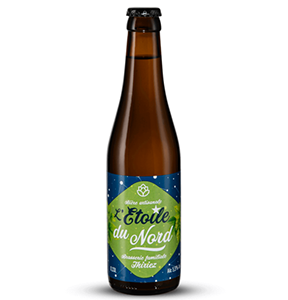
Brasserie Thiriez’s Étoile du Nord clone, All-Grain
(5 gallons/19 L, all-grain)
OG = 1.047 FG = 1.006
IBU = 35 SRM = 3 ABV = 5.3%
Founder Daniel Thiriez started his brewery with one thing in mind — to bring farmhouse brewing back to France and French Flanders in particular. Their La Blonde d’Esquelbecq, Les Québécoises, and Étoile du Nord (known as “Extra” in the U.S.) are the basis for what would become the signature beers of French saison. All are crisp, clean, fermented without wild yeast and can only be described as sublime in their simplicity. Everything is balanced. Daniel has recently retired and has passed the torch to his daughter, Clara, who was kind enough to share the recipe for Étoile du Nord / Extra. Note that Daniel Thiriez has long stated the yeast that companies sell as “French Saison” is different from his strain. If you’d like, try any clean diastatic saison or biere de garde yeast in its place.
Ingredients
9.5 lbs. (4.3 kg) Soufflet Pilsner malt
8 AAU Brewer’s Gold hops (60 min.) (1 oz./28 g at 8% alpha acids)
2.75 oz. (78 g) Bramling Cross hops (whirlpool)
12 mL lactic acid
Wyeast 3711 (French Saison), Omega OYL-026 (French Saison), or Imperial Yeast B64 (Napoleon) yeast
1 cup corn sugar (if priming)
Step by step
This recipe uses a step mash. Add lactic acid to adjust mash pH to 5.5–5.7. Begin with a 5-minute rest at 131 °F (55 °C). Ramp temperature up to 144 °F (62 °C) and rest there for 50 minutes. Raise temperature to 162 °F (72 °C) and rest for 5 minutes. Sparge with water at 172 °F (78 °C) and collect 6.5 gallons (24.5 L) of wort and boil for 60 minutes. Add the Brewer’s Gold at the start of the boil.
When the boil is complete, turn off heat and give the wort a stir to create a whirlpool and then add the Bramling Cross hops. Cover and let rest for 15 minutes, then cool to 62 °F (17 °C) and pitch yeast. Allow to free rise to no warmer than 76 °F (24 °C).
When fermentation is complete, add priming sugar and bottle or condition in a keg, allowing to carbonate at room temperature for two weeks prior to cooling.
Brasserie Thiriez’s Étoile du Nord clone, Extract
(5 gallons/19 L, extract only)
OG = 1.047 FG = 1.006
IBU = 35 SRM = 3 ABV = 5.3%
Ingredients
5.2 lbs. (2.4 kg) Pilsner dried malt extract
8 AAU Brewer’s Gold hops (60 min.) (1 oz./28 g at 8% alpha acids)
2.75 oz. (78 g) Bramling Cross hops (whirlpool)
12 mL lactic acid
Wyeast 3711 (French Saison), Omega OYL-026 (French Saison), or Imperial Yeast B64 (Napoleon) yeast
1 cup corn sugar (if priming)
Step by step
Heat 6.5 gallons (24.5 L) of water to a boil and then turn off heat. Stir in the malt extract until completely dissolved and then return to heat. Boil 60 minutes, adding the Brewer’s Gold at the start of the boil.
When the boil is complete, turn off heat and give the wort a stir to create a whirlpool and then add the Bramling Cross hops. Cover and let rest for 15 minutes, then cool to 62 °F (17 °C) and pitch yeast. Allow to free rise to no warmer than 76 °F (24 °C).
When fermentation is complete, add priming sugar and bottle or condition in a keg, allowing to carbonate at room temperature for two weeks prior to cooling.