
The Homebrewer Behind Trillium
“I’ll always be a homebrewer.”
That was the last line of the email from Jean-Claude Tetreault — who, along with his wife, Esther, founded Trillium Brewing Co. in Boston, Massachusetts, in 2013 — when agreeing to our interview. It was a hefty request, including a behind-the-scenes tour at the brewery, taking pages from Trillium’s recipe books, and reporting back for this story. The line struck me. Sure, JC, as he’s known, made a name for himself in the early 2000s through his ahead-of-its-time homebrewing blog and sharing of information in online homebrewing forums with thousands of other passionate hobbyists. But 14 years removed from opening its first location in Boston’s Fort Point neighborhood — and four years after opening their massive 140,000-square-foot (13,000-square-meter) production brewery in nearby Canton — Trillium is far from its homebrewing roots.
Or so I thought.
Humble Beginnings
Drawn to the idea of creating memorable experiences through food, JC grew up dreaming of becoming a chef. He found joy in cooking dinner for his family and preparing spreads for holiday gatherings, seeing food as a way to bring people together during life’s special moments. But as he learned more about the demanding schedule of a professional chef, he realized it would mean missing many of the very moments he wanted to help create. Rather than pursue culinary school, JC changed course and enrolled at Sacred Heart University, where he studied biology and biochemistry. The subjects were a good fit for his curious nature, though the desire to create for others stuck with him.

If he couldn’t scratch that itch professionally, JC found hobbies to help. Dabbling in different phases — from making sushi, ice cream, and more — JC eventually came to making beer. “And that’s the one I really fell in love with,” he recalled as he sat across the table from me in the restaurant attached to Trillium’s production brewery. Sweat had already dampened the back of his shirt from the work that began in the brew house hours before I arrived. The restaurant and taproom had yet to open for the day, but he’d been living up to his reputation of having his hand in every aspect of the brewery and distillery (and as he waited for my arrival, he was pulling weeds that had grown through the mulch near the entrance). No chore is too small.
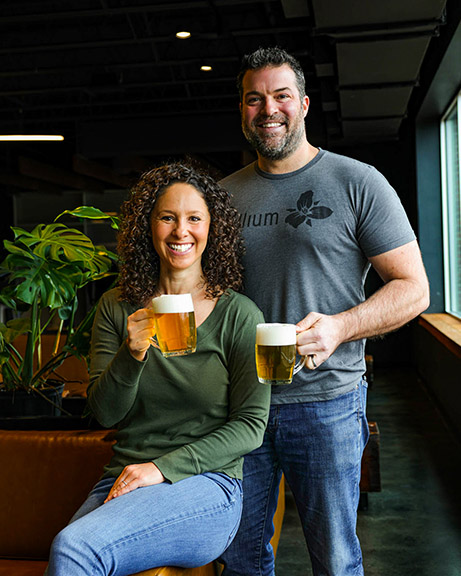
“The first beer I ever brewed was an oatmeal porter, and that’s what our Pot & Kettle oatmeal porter is based on. That recipe is almost the same as the one when I was homebrewing,” he says.
It didn’t take long for JC to become enthralled with homebrewing. Always the tinkerer, he soon cobbled together an all-grain brewing system that met his needs and fit in his small condo just outside of Boston proper.
It wasn’t just the brewing process JC found himself immersed in; it was everything around the hobby — from sharing beers with friends and family, the community he interacted with through homebrewing message boards and the Boston Wort Processors homebrew club, to exploring the unknown that drives curious minds.
The only issue — beyond a small brewing space in his kitchen and a lack of temperature control in the muggy summer heat — was the limited time his schedule allowed to devote himself to the hobby.

“I always felt like I did not have even close to the amount of time that I wished I could be putting into homebrewing,” he said. The forums offered many benefits, from being a part of a larger group with similar interests to learning from what everyone else was doing. “It felt like it had this incredible multiplying effect where you could glean information, get validation, learn something new, or dispel rumors, which you couldn’t do all on your own.”
Soon he had a homebrewing blog (which is still accessible, though it has not been updated since 2011) where he detailed homebrewing experiments, equipment, techniques, and recipes. JC credits that blog for laying a foundation for his brewery plan. “The blog was really just me kind of taking notes and talking out loud to anybody who might want to listen,” he says. “Obviously, I had no idea what it took from ingredients sourcing, quality checks, consistency, or any of those kinds of things, but I had kind of been doing R&D from day one as a homebrewer. Through my homebrewing blog, I was developing a brand, which, at that time, was really just an aspirational dream of, ‘if I could open a brewery one day,’ you know?”
Working a full-time job and dreaming of a career in brewing, it was Esther and JC’s wedding that was the jumping board to going pro. With the help of a friend to create labels, JC brewed four beers for the wedding — Trillium (a farmhouse ale that would go on to become the first commercial beer released), Stonington Pale Ale (an early version of what is now Fort Point Pale Ale), Pot & Kettle oatmeal porter, and a Belgian wit with honey named Bumble.
“That’s where it starts to come into more of a focus of what this brand would be,” he recalls.
JC credits Esther with helping turn the dream into reality. Already an entrepreneur who had successfully launched her own business, Esther gave JC the confidence to believe that Trillium could become more than a hobby. With the momentum of the craft beer movement building across the country — though few breweries operating in Boston itself — and Esther’s support of the idea, the couple began making business plans.
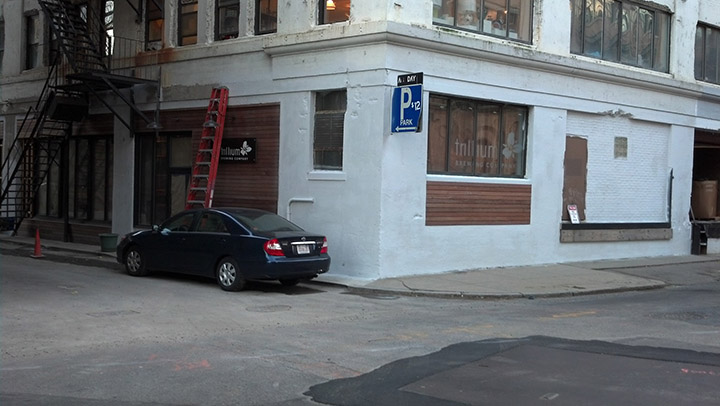
A lease was signed in 2011 for a 2,500-square-foot (230-square-meter) facility off an alleyway on Congress Street in the up-and-coming Fort Point neighborhood. After years of developing recipes as a homebrewer, the excitement of opening a brewery was quickly tempered by delays and seemingly endless red tape. Securing zoning approvals, licenses, and meeting the many regulatory requirements of the day took more than two years from the date the lease was signed. “We were pretty darn close to being out of money, and then not opening at all,” JC recalled. While beer wasn’t being made, the brewery was ready to go, featuring a 10-barrel direct-fire boil kettle and a mash tun fashioned from an old horizontal dairy tank by a fabricator who was given the direction to make one “as large as possible that would fit into the building.”
Finally, Trillium opened its doors to customers in March 2013. By that time, the brewery was already cash-strapped, but they were about to discover Boston had an appetite for what Trillium was brewing.
Trillium Brewing Co. is Born
“There really weren’t very many new small breweries in the greater Boston area at that time, so there was a big, pent-up demand for what was kind of happening in the beer community across the country, and really, across the world,” JC recalls.
Having made a name for himself with his homebrews, as well as brewing pilot batches in the months leading up to its opening, word had gotten out, and anticipation continued to grow for the months — and years — it took for Trillium to finally open its doors.
“I had made tons and tons of connections in the community. We were piloting at a place called Greentown Labs, which was a quarter mile from where our brewery was going to be. And every Saturday, I would go out there and meet up with a bunch of homebrewing nerds like myself. We’d make a one-barrel batch on their loading dock, and we’d do cellar work, we’d package it, condition it, and then serve it at their Friday night socials,” he said. “So just by word of mouth in the Fort Point neighborhood, there was a huge amount of anticipation.”
“Going into the second weekend we were open, we ran out of beer on Friday. So we didn’t even make it to the second weekend.”
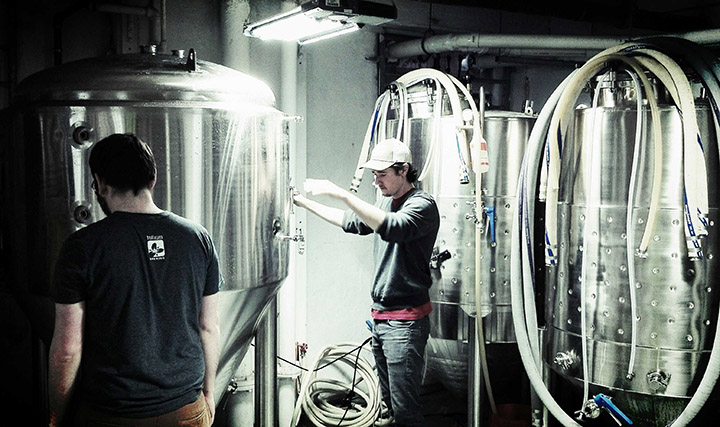
Just two fermenters meant just two beers were available at a time (there were six fermenters in the original plan, but as cash dwindled during delays, so too did the plans). When beer ran out, it often took days until the next batches were ready for sale. Not being able to meet demand wasn’t the only issue.
Without the ability to can or bottle, and state laws prohibiting consumption at the brewery, the only sales in those early days were growler fills. The slow nature of filling growlers on demand meant there were often lines out the door, around the corner, and down the street. Customers regularly had to wait up to 90 minutes to get their fill. Fortunately for Trillium, the beer was good enough that they kept coming back. Week after week. Line after line.
A Decade of Growth
Trillium’s first expansion came in 2015 with a move to a 16,000-square-foot (1,500-square-meter) facility in Canton (distinct from its current Canton location). That brewery housed an upgraded 30-barrel brewhouse and, for the first time, allowed Trillium to serve beer on-site. Expansion continued with a seasonal beer garden on Boston’s Greenway, followed by a brewery and restaurant in Fort Point, and later a taproom and beer garden in the Fenway neighborhood, just a few blocks from Fenway Park. Even with all the growth, JC said the brewery was never able to make enough beer.
“For the first eight or nine years that we were operating, we were chasing production capacity to keep up with demand,” JC said. “We didn’t open a brewery to say ‘no’ to people, and that’s what we were kind of doing all the time.”
The toll not being able to meet demand took is one of the reasons Trillium built the vast 140,000-square-foot (13,000-square-meter) brewery where nearly all of its beer (and spirits) is now produced. “That’s one of the reasons why we built so much capacity here. Not just to help to maintain consistency and quality, but to eliminate some of the stress.”
JC refers to the newest brewery as Trillium’s “forever home.” Previously housing the Reebok headquarters, the space was largely a blank slate when Trillium bought the building. JC and Esther designed the modern, industrial-style restaurant that doubles as an event space and seats 750 (and up to 1,500 for special events). Next to it is a taproom and an outdoor beer garden. But the main attraction is behind all of that.
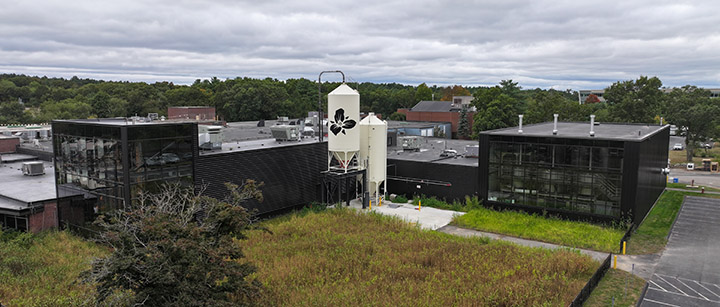
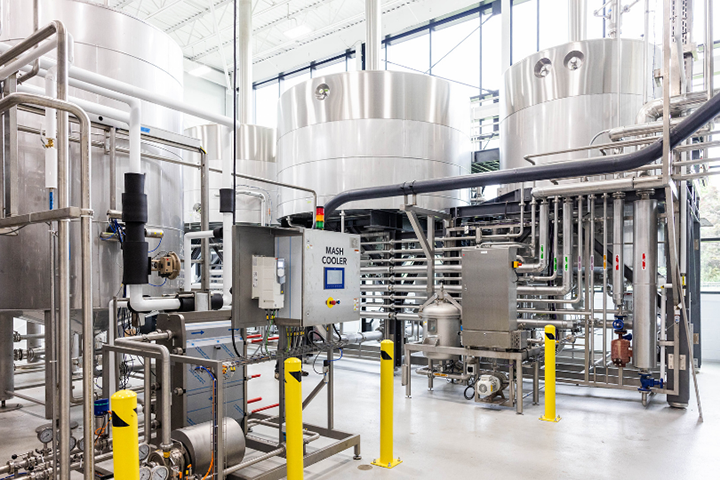
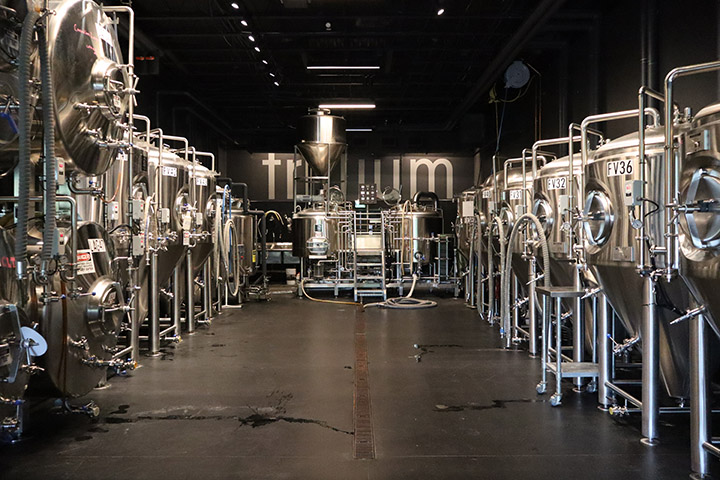
Made up largely of second-hand brewing equipment, the primary brewhouse has a 50-barrel capacity where double batches are brewed six days a week. Vertical fermenters tower nearby for all of Trillium’s ales, while 120-barrel stainless steel horizontal lagering tanks are stacked beside them. A short walk from there is Trillium’s sour program with barrels and foeders that age the brewery’s revered wild ales. (JC wishes it were in a different building altogether to alleviate risk of cross-contamination, but there are strict policies in place about crossing from one side to the other.) On the other side of a wall along the brewery is Trillium’s newest project — a distillery that includes a 30-foot (9-m) column still and 1,000-gallon 3,800-L) pot still. The spirits produced there make up the backbone of Trillium’s ready-to-drink canned cocktails (read more about Trillium’s distillery in the sidebar, below), not to mention serving as a feeder program for the brewery’s barrel-aged beers.
Trillium’s growth over the years has been astonishing, even to JC and Esther. “Nobody could ever possibly have planned for this,” JC said. “Of course we were putting together five-year plans, but zero of them have lasted more than a year and a half.”
While new locations have been added frequently over the past decade, JC says Trillium has reached its ideal size.
“Esther and I are not trying to take over the world,” he says, letting out a chuckle.
What’s Brewing?
While much of their beer is sold from its own locations — it’s not uncommon for customers to drive to Trillium’s taprooms and leave with a dolly stacked with cases of canned four-packs — in recent years Trillium has become widely available throughout Massachusetts. They also partner with a network of distributors in more than a dozen U.S. states, creating limited availability from coast to coast.
Living in a state where Trillium is not yet distributed myself — though Vermonters are just a few hours from Boston — I have always associated Trillium with their hazy pale ales, IPAs, and double IPAs. These smooth, aromatic hop bombs are what brought Trillium national attention through beer rating websites in the 20-teens, and are the beers most often found “in the wild.” With inclusion on all of the “best breweries” and “best IPA” lists across the web and in beer appreciation publications being driven by hazies, it’s easy to overlook that Trillium is far from just another New England IPA brewery.
Visible right after walking through the front doors in Canton is Trillium’s pilot brewery — a 5-barrel Ss Brewtech brewhouse standing along a back wall with a dozen 5-barrel fermenters lined beside it. Brewed on two to four times a month for experimental batches as well as taproom exclusives, the team at Trillium produces just about every beer style there is. JC estimates Trillium creates over 100 unique beers a year — half of them being styles other than IPAs.
“I love them all, you know?” JC says, grinning. “I love the creative process. I love all these traditional styles that are a callback to a sense of place, agricultural roots, culture . . . and the newer styles where people are re-imagining what beer can be.”
So, is there a style Trillium hasn’t released, I asked?
JC had to think for a moment before offering a couple. “There are obscure styles, like Polish Grodziskie or sahti . . .”
Even with the bigger capacity, there are, of course, only so many hours in a day.
“. . . But we probably will, at some point,” he says, finishing his thought with a wry smile.
To this day, JC has his hands in every recipe Trillium releases. It’s a decision, he says, driven by a “continuity of intention.” That’s not to say there isn’t collaboration among the brewing team.
“I’m absolutely taking feedback from others,” he says. “At the same time, I’m making sure that everybody understands the intention for what we’re trying to do . . . so, when I say I’m designing the recipes, I’m sort of designing the intention for the beer, and then we collaborate towards what contributes to that.”
While offering beers and other beverages to meet every customer’s taste is the goal, and partly why so many unique batches are released every year, there are a few beers that could be considered flagships that make up a disproportionate amount of Trillium’s production. The three most popular include two longtime offerings: Fort Point Pale Ale — the beer based on a homebrew served at JC and Esther’s wedding that is driven by huge Citra® hop additions — and the Galaxy®-based Congress Street IPA, which was first brewed in late 2013. The third is Party Pump, a newer, relatively simple American golden ale first released in 2024. In addition to being a fan favorite among those who want a more accessible beer that won’t shock the taste buds, Party Pump serves a dual purpose as a beer that acts as a yeast propagator for the brewery’s popular hazy IPAs.
“We’re not harvesting yeast from our hoppy beer . . . so we needed a mechanism to have very high-quality yeast in the sufficient quantities that we wanted to be able to have at all times. So, having a beer that also is used for yeast propagation really serves two purposes,” JC says.
Trillium will reuse yeast for 6–8 generations. Beyond that, JC says, they begin to see genetic drift. In addition to its hazy strain, Trillium uses up to a dozen different yeasts in a year — a requirement when brewing such a wide variety of styles.
Homebrewer at Heart
There are two general mentalities among homebrewers — those who dream of turning their hobby into a profession and those who believe doing so would strip away the joy that drew them to brewing in the first place. JC firmly belongs to the first camp. Listening to him describe why brewing became the perfect outlet for his creativity, ambition, and desire to build something lasting, it’s clear that for some, turning a hobby into a career doesn’t kill their passion for it.
What keeps him excited to go to work each day?
“It’s not different from the idea of making the beers for us at my wedding. It’s to create something that I not only love, but I think other people will love. To go through that process, and, as a team, put together those things, and bring it into reality,” he says. “And then watching people’s eyes light up when they have the beer that we’ve made.”
With the brewery, numerous taprooms and restaurants, a distillery, and a farm, Trillium has come a long way from filling growlers to a line of thirsty patrons extending out the Fort Point doors down Congress Street. JC is even further removed from squeezing in a brew day after work, boiling wort on a kitchen stove. And yet, the man behind everything the brewery does still has the same excitement and inherent curiosity homebrewers begin with.
“Brewing is one of those disciplines that the more you learn, the more you learn that you don’t know,” he explains. “That sense of wonder, and discovery, and passion that people will ascribe to being a homebrewer; it always feels that way for me, and it’s a pretty important driving force for me.”
More Than Beer (Sidebar)
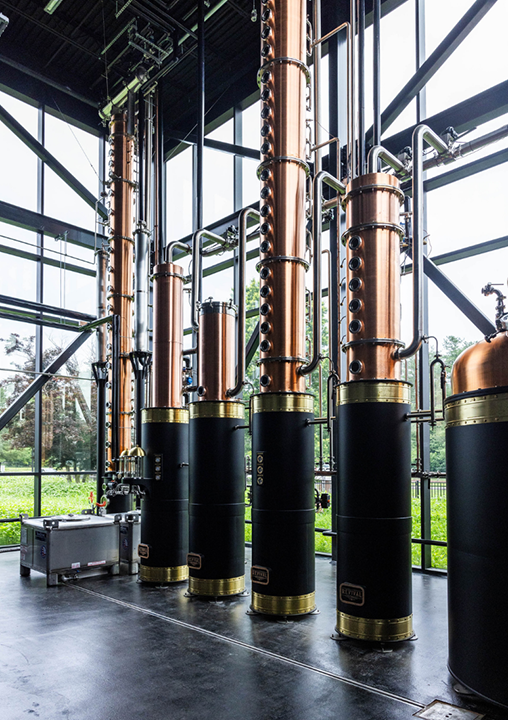
As patrons approach the main entrance of Trillium’s massive headquarters in Canton, it isn’t the brewhouse or towering stainless steel fermenters they see through the glass wall panels. Instead, it’s a massive 30-foot-tall, 20-inch-diameter (9-m-tall, 50-cm-diameter) copper continuous column still. Next to it is a 1,000-gallon (3,800-L) hybrid pot still. The Trillium distillery, separated from the brewing space by a wall, produces spirits available for purchase by the bottle as well as those used in Trillium’s ready-to-drink canned cocktails.
While the addition of a distillery coincided with the opening of Trillium’s most recent location — and around the time the beverage industry began experiencing a downturn in beer sales and an uptick in ready-to-drink canned cocktails — the idea for a distillery began shortly after Trillium opened its first brewery location a dozen years ago.
“This isn’t a reaction to what’s happening in the broader beer world,” JC said. “I think it was year two that I told Esther . . . you know, when you’re a brewery, you’re like 95% of the way there to being a distillery, too.”
The majority of Trillium’s whiskey is produced from the copper column still, doing in a day what would take a week in the pot still. Running one production cycle per week, whiskey mash is pumped into the continuous column still at a rate of 10 gallons (38 L) per minute, producing 12 casks of whiskey per run.
The hybrid pot system is used primarily to create other types of spirits, including traditional single-malt whiskey, vodka, and gin. Between the two stills, Trillium can produce just about any type of spirit they wish. Having learned from a decade of outgrowing brewing spaces, it is also sized to accommodate growth.
“The majority of the distillation team’s work is in whiskey, but our diverse portfolio calls for us to be able to produce lots and lots of other different types of spirits as well,” JC explained.
Much of the whiskey comes from corn grown on Trillium’s 163-acre farm in North Stonington, Connecticut, where about 60 acres are dedicated to farming grain.
“The majority is in corn, which we use in Bourbon and our rye whiskey, too,” JC said, adding that some corn is also used for beer production and cornbread found on the dining menus at Trillium’s restaurants.
Also grown at the farm is 2-row winter barley, which is malted in Connecticut and used to produce single-malt whiskey.
Trillium now offers a line of canned cocktails — including options like Rum Punch and Cape Codder — as well as canned seltzers, teas, and lemonades, all of which are made with spirits created in-house. The selection has allowed Trillium tasting rooms to offer an option for anyone looking for an adult beverage even if beer isn’t their first choice.
“We’ve set ourselves up to be able to meet the moment for whatever group of people, whatever community wants to come and enjoy what they want to enjoy,” JC said. “There really isn’t a lack of options or constraints around what that is.”
Trillium’s Approach to Hazy IPAs (Sidebar)
JC has shared tips with us on brewing great hazy IPAs in the past, which we encourage you to read, but beyond water chemistry and hop selection, we asked him to share what makes Trillium’s IPAs different from other hazy IPAs. It’s no surprise he said these styles begin with great hops. What was surprising is the lengths he goes to find them, which is more involved than visiting farms and doing the hop rubs most brewers talk about.
“When we first were able to start doing selection, we approached it like everybody else — rub the flowers of the brewer’s cut, and you try to pick out the aromas and flavors that you really like, and then make sure the ones you don’t like aren’t in there,” JC said.
But experience bore mixed results, as sometimes hops that presented well on the table didn’t translate to the beer, and vice versa. “The rub, while important to rule out things like OG (onion/garlic), smoke taint, and things like that, to some level of specificity, was insufficient for us to understand the impact that the biotransformation process was going to have for hazy IPAs.”
As a result, Trillium began performing benchtop fermentations after qualifying a number of lots to get a truer representation of how they would perform in beer. “And that’s how we get what we think is a very distinctive Citra® hop, a very distinctive Mosaic® hop — just taking that extra step in diligence.”
The other thing JC talks about on the ingredient side is a more recent swing toward the inclusion of chit malt, which in some newer recipes is used in place of some of the flaked grains Trillium traditionally relied on in its hazy recipes. “Chit malt is able to accomplish what people expect to come from flaked grains . . . the lower color, the lower impact of quote unquote malt, some of that fluffier texture on the palate. We feel like we get more of that from chit.”
JC said Trillium has also changed how it does its biggest dry-hop charges. Double dry hopping, or DDH, is a common variant of Trillium’s most popular hazies . . . but what does that mean?
“We initially produced double dry hop beers by doing two separate hop charges,” JC explains. “It was probably two years or so until we were like, well, let’s just try to do a single charge with twice as much.”
In addition to exposing the beer to half the oxygen by only opening the conditioning tank once, the results showed a greater hop intensity and quicker turnaround that allowed for more time post-dry hop for cold conditioning. “We thought the beer was incrementally more aromatic and flavorful, it reduced the amount of oxygen, and allowed us to put out what we thought was a better conditioned product in the same amount of time.” Ever since, that’s how all DDH’ing is done at Trillium.
One final change from the early days — and this is related to all styles, not exclusively hazy IPAs — is Trillium has simplified its ingredients. No Trillium recipe is ever set in stone, and even the flagship beers like Fort Point Pale Ale and Congress Street IPA have been tweaked through the years. Often, those changes are a simplification or reduction of specialty grains or hop varieties in a single recipe.
While homebrewers often want to add more ingredients to each batch in search of complexity, JC advises they begin with more basic recipes and then evaluate the results. “Over time, we found that less is more in a lot of cases. It allows the majority of ingredients to be more prominent and to be more focused and show the breadth within themselves. Sometimes when you add more, it starts to muddle things — texture, character, aromas, or flavors,” JC says.
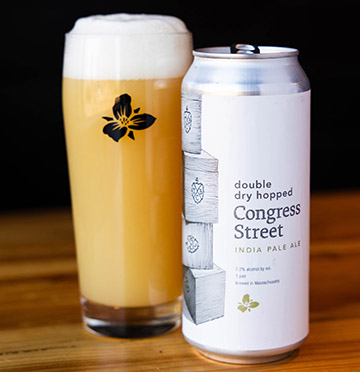
Trillium Brewing Co.’s DDH Congress Street clone
(5 gallons/19 L, all-grain)
OG = 1.070 FG = 1.015
IBU = 70 SRM = 5 ABV = 7.2%
This Galaxy®-heavy IPA is based on a recipe from JC Tetreault’s homebrewing days. No boil hops are added, and just a small whirlpool addition is used to add a slight bitterness. The dry-hop addition is double in this recipe (so cut it in half if you prefer the non-DDH version). Congress Street has been a crowd favorite since the early days.
Ingredients
11.2 lbs. (5.1 kg) North American 2-row pale malt
1.7 lbs. (0.8 kg) flaked wheat
1.7 lbs. (0.8 kg) white wheat malt
0.25 oz. (7 g) Galaxy® hops (whirlpool)
16 oz. (450 g) Galaxy® hops (dry hop)
1 g Whirlfloc (15 min.)
Wyeast 1318 (London Ale III), White Labs WLP066 (London Fog), Imperial Yeast A38 (Juice), or LalBrew Verdant IPA yeast
¾ cup corn sugar (if priming)
Step by step
This recipe uses a “soft water” profile. If you have high total alkalinity or high mineral content water, dilute back with reverse osmosis or distilled water. Add back small quantities of calcium chloride and gypsum at a 4:1 ratio.
Add all of the crushed grains to the mash tun and perform a single-infusion mash at 156 °F (69 °C). Mash out and collect 6.5 gallons (24.5 L) of wort in the boil kettle. Boil for 60 minutes. Add the Whirlfloc in the last 15 minutes.
When the boil is complete, adjust pH to 5.0 with lactic acid, if necessary. Chill wort to 180 °F (82 °C) and add the whirlpool hop addition. Stir wort to create a whirlpool and then allow it to settle for 10 minutes before cooling wort to 66 °F (19 °C).
Oxygenate wort (if using liquid yeast) and pitch yeast. Ferment at 66 °F (19 °C). Within 24 hours of reaching terminal gravity, turn off any temperature control to ensure the yeast stays active and add the dry-hop addition. Open a fresh package of hops to ensure the best possible quality.
Cold crash after bioconversion is validated via a sensory panel, usually within 48–72 hours.
Rack the beer off of the hops into a keg and carbonate to 2.55 volumes. Plan to cold condition at 30 °F (-1 °C) for at least 14 days (21 days is better). Do not move or disturb the keg. Pour out trub from the faucet every two days starting at day 7 in the keg until no more is pulled through.
Extract option:
Replace the grains with 6 lbs. (2.7 kg) light dried malt extract and 1.75 lbs. (0.8 kg) wheat dried malt extract. Bring 6 gallons (23 L) of water to a boil and then turn off the heat. Stir in the malt extracts until fully dissolved, and then return to the heat.
Boil for 60 minutes. Add the Whirlfloc in the last 15 minutes. When the boil is complete, adjust pH to 5.0 with lactic acid, if necessary. Chill wort to 180 °F (82 °C) and add the whirlpool hop addition. Stir wort to create a whirlpool and then allow it to settle for 10 minutes before cooling wort to 66 °F (19 °C).
Oxygenate wort (if using liquid yeast) and pitch yeast. Ferment at 66 °F (19 °C). Within 24 hours of reaching terminal gravity, turn off any temperature control to ensure the yeast stays active and add the dry-hop addition. Open a fresh package of hops to ensure the best possible quality.
Cold crash after bioconversion is validated via a sensory panel, usually within 48–72 hours. Rack off of the hops into a keg and carbonate to 2.55 volumes. Plan to cold condition at 30 °F (-1 °C) for at least 14 days (21 days is better). Do not move or disturb the keg. Pour out trub from the faucet every two days starting at day 7 in the keg until no more is pulled through.
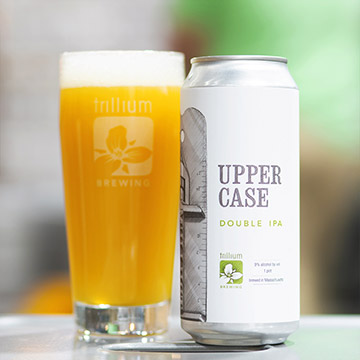
Trillium Brewing Co.’s UPPER CASE clone
(5 gallons/19 L, all-grain)
OG = 1.083 FG = 1.015
IBU = 65 SRM = 6 ABV = 9%
This big double IPA is dangerously smooth, hiding its 9% ABV behind massive Mosaic®, Citra®, and Galaxy® dry-hop additions that contribute overripe mango, pineapple, and passion fruit aromas. The impression of tropical fruit leads into the flavor profile which is layered further by white wine, pine resin and grapefruit zest. Like many of Trillium’s hazy IPAs, no hops are added until the whirlpool stage.
Ingredients
15.2 lbs. 6.9 kg) North American 2-row malt
1.2 lbs. (0.5 kg) white wheat malt
14 oz. (400 g) flaked wheat
0.25 oz. (7 g) Mosaic® hops (whirlpool)
0.25 oz. (7 g) Citra® hops (whirlpool)
7 oz. (200 g) Mosaic® hops (dry hop)
7 oz. (200 g) Citra® hops (dry hop)
3.2 oz. (90 g) Galaxy® hops (dry hop)
1 g Whirlfloc (15 min.)
Wyeast 1318 (London Ale III), White Labs WLP066 (London Fog), Imperial Yeast A38 (Juice), or LalBrew Verdant IPA yeast
¾ cup corn sugar (if priming)
Step by step
This recipe uses a “soft water” profile. If you have high total alkalinity or high mineral content water, dilute back with reverse osmosis or distilled water. Add back small quantities of calcium chloride and gypsum at a 5:1 ratio.
Add all of the crushed grains to the mash tun and perform a single-infusion mash at 156 °F (69 °C). Mash out and collect 6.5 gallons (24.5 L) of wort in the boil kettle. Boil for 60 minutes. Add the Whirlfloc in the last 15 minutes.
When the boil is complete, adjust pH to 5.0 with lactic acid, if necessary. Chill wort to 180 °F (82 °C) and add the whirlpool hop addition. Stir wort to create a whirlpool and then allow it to settle for 10 minutes before cooling wort to 66 °F (19 °C).
Oxygenate wort (if using liquid yeast) and pitch yeast. Ferment at 66 °F (19 °C) until fermentation is complete. Within 24 hours of reaching terminal gravity, turn off any temperature control to ensure the yeast stays active and add the dry-hop additions. Open a fresh package of hops to ensure the best possible quality.
Cold crash after bioconversion is validated via a sensory panel, usually within 48–72 hours. Rack off of the hops into a keg and carbonate to 2.55 volumes.
Plan to cold condition at 30 °F (-1 °C) for at least 14 days (21 days is better). Do not move or disturb the keg. Pour out trub from the faucet every two days starting at day 7 in the keg until no more is pulled through.
Extract option:
Replace the grains with 8.25 lbs. (3.75 kg) light dried malt extract and 1 lb. (0.45 kg) wheat dried malt extract. Bring 6 gallons (23 L) of water to a boil and then turn off the heat. Stir in the malt extracts until fully dissolved, and then return to the heat. Boil the wort for 60 minutes. Add the Whirlfloc in the last 15 minutes.
When the boil is complete, adjust pH to 5.0 with lactic acid, if necessary. Chill wort to 180 °F (82 °C) and add the whirlpool hop addition. Stir wort to create a whirlpool and then allow it to settle for 10 minutes before cooling wort to 66 °F (19 °C).
Oxygenate wort (if using liquid yeast) and pitch yeast. Ferment at 66 °F (19 °C) until fermentation is complete. Within 24 hours of reaching terminal gravity, turn off any temperature control to ensure the yeast stays active and add the dry-hop additions. Open a fresh package of hops to ensure the best possible quality.
Follow the conditioning protocol from the all-grain recipe.
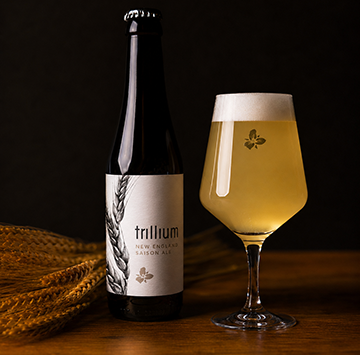
Trillium Brewing Co.’s Trillium clone
(5 gallons/19 L, all-grain)
OG = 1.047 FG = 1.000
IBU = 46 SRM = 3 ABV = 6.1%
This New England saison is one of Trillium’s earliest recipes and utilizes local ingredients, including corn grown at Trillium’s farm in North Stonington, Connecticut. Feel free to substitute ingredients local to you when brewing this recipe, though JC strongly recommends using Valley Malt’s Danko rye malt, which is less spicy than most rye malts used for brewing.
Ingredients
8 lbs. (3.6 kg) Valley Malt Pilsner malt
1.25 lbs. (0.6 kg) Valley Malt Organic Danko Rye malt
8 oz. (225 g) dent corn (milled into a powder)
10.8 AAU Sterling hops (first wort hop) (1.2 oz./34 g at 9% alpha acids)
0.5 oz. (14 g) Saaz hops (whirlpool)
1 g Whirlfloc (15 min.)
Wyeast 3724 (Belgian Saison), White Labs WLP565 (Belgian Saison I), or SafAle BE-134
1 cup corn sugar (if priming)
Step by step
The corn will require a cereal mash. Combine the corn and 1 lb. (0.45 kg) of Pilsner malt into a pot, mix well, and add 1.25 gallons (5 L) of 125 °F (52 °C) water. Slowly raise the temperature to 205 °F (96 °C), stirring regularly. Be careful not to allow the bottom to scorch. Rest at 205 °F (96 °C) for 60 minutes, stirring every 10 minutes or so.
The primary mash uses a “soft water” profile. If you have high total alkalinity or high mineral water, dilute back with reverse osmosis or distilled water. Add back small quantities of gypsum and chloride at a 3:1 ratio.
Combine the cereal mash with the main mash to hit a temperature of 142 °F (61 °C) and slowly raise to 162 °F (72 °C) over the course of 60 minutes. Alternatively, if you are unable to heat your mash tun, do a single-infusion mash at 146 °F (63 °C) for 60 minutes. Then stir in boiling water to bring the mash temperature back to 146 °F (63 °C) for another 30 minutes (for a total mash time of 90 minutes) to try to drive as much attenuation as possible.
Mash out and collect 6.5 gallons (24.5 L) of wort on top of the first wort hops in the kettle. Boil for 60 minutes, adding the Whirlfloc in the last 15 minutes.
When the boil is complete, adjust pH to 5.0 with lactic acid, if necessary. Chill wort to 180 °F (82 °C) and add the whirlpool hop addition. Stir wort to create a whirlpool and then allow to settle for 10 minutes before cooling wort to 72 °F (22 °C).
Pitch yeast and allow the fermentation to free rise quickly to the low 80s °F (upper 20s °C), then gradually climb to high 80s or low 90s °F (low 30s °C).
When fermentation is complete, rack off the yeast and (preferably) bottle condition in thick glass bottles to 3.5 volumes with dextrose (or force carbonate in a keg). Keep bottles at 85 °F (29 C) for three weeks. Be sure to use bottles capable of handling higher carbonation levels. Validate attenuation is complete before chilling bottles. Bottles should be kept in a fridge for at least a week before enjoying. Pour decisively in a tulip to allow enough room for the foam to rise and set.
Partial Mash Option:
Reduce the Pilsner malt to 2 lbs. (0.9 kg), eliminate the crushed corn, and add 3.3 lbs. (1.5 kg) Pilsner dried malt extract and 8 oz. (230 g) of flaked corn. Add the crushed malts and flaked maize to a large muslin bag and submerge in 5 quarts/ (5 L) of water to stabilize the mash at 151 °F (66 °C) and hold for 60 minutes. Remove the grain bag, rinse with water, and then top up the brew kettle to 6 gallons (23 L). Stir in malt extract until dissolved, and then bring to a boil for 60 minutes. Follow the remainder of the all-grain recipe.
Tips for Success:
Many rye malts will have too harsh a rye spice flavor. If not using Danko Rye, JC recommends reducing the rye to about 8 oz. (225 g) and making up the difference with Pilsner malt. Substituting flaked maize is an option if you cannot get finely milled dent corn in the all-grain recipe.
JC recommends pitching about half the cell count of a normal ale fermentation per degree Plato when using the Dupont strain. This strain is notorious for the “Dupont stall,” where fermentation appears to stop before reaching final gravity. The yeast should pick back up again if following the temperature increases laid out in the instructions. If you do not have a temperature-controlled chamber, try wrapping a blanket around the fermenter, using a heat pad, or other means. “Do whatever you need to keep the temperature going up. There’s a very long tail of attenuation, and if any kind of cooling happens, it’ll prevent the yeast from fully attenuating to 0 °Plato (1.000 SG). Sometimes it takes 10 days, sometimes 3+ weeks,” JC said.
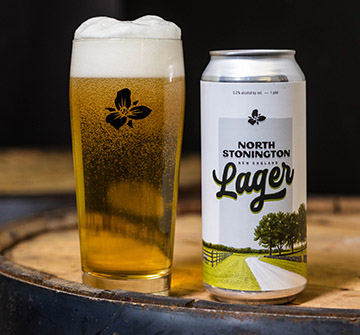
Trillium Brewing Co.’s North Stonington New England Lager clone
(5 gallons/19 L, all-grain)
OG = 1.047 FG = 1.008
IBU = 40 SRM = 3 ABV = 5.2%
Brewed for Trillium’s 12th Anniversary, this lager is named after the town in Connecticut where Trillium’s farm is located and was brewed using Trillium Farm-grown corn. Pouring a straw-yellow, North Stonington Lager presents notes of biscuit and corn chips with a moderate noble hop aroma and a light-to-medium body.
Ingredients
8.7 lbs. (3.9 kg) BestMalz BEST Heidelberg malt
14 oz. (400 g) dent corn, milled to a fine powder
9.4 AAU Magnum hops (60 min.) (0.75 oz./21 g at 12.5% alpha acids)
2 AAU Spalter Select hops (20 min.) (0.5 oz./14 g at 4% alpha acids)
0.5 oz. (14 g) Spalter Select hops (whirlpool)
1 g Whirlfloc (15 min.)
Favorite German or Czech lager yeast
¾ cup corn sugar (if priming)
Step by step
The corn will require a cereal mash. Combine the corn and 2 lbs. (0.9 kg) of Heidelberg malt into a pot, mix well, and add 1.25 gallons (5 L) of 125 °F (52 °C) water to make a cereal mash. Slowly raise the temperature to 205 °F (96 °C), stirring regularly. Be careful not to allow the bottom to scorch. Rest at 205 °F (96 °C) for 60 minutes, stirring every 10 minutes or so.
The primary mash uses a “soft water” profile. If you have high total alkalinity or high mineral content water, dilute back with reverse osmosis or distilled water. Add back small quantities of gypsum and chloride at a 3:1 ratio.
Combine the cereal mash with the main mash to hit a temperature of 154 °F (68 °C) and keep at this temperature for 40 minutes, then mash out at 174 °F (79 °C) for 10 minutes before lautering.
Collect 6.5 gallons (24.5 L) of wort in the boil kettle. Boil for 60 minutes, adding hops as indicated and the Whirlfloc in the last 15 minutes.
When the boil is complete, adjust pH to 5.0 with lactic acid, if necessary. Chill wort to 180 °F (82 °C) and add the whirlpool hop addition. Stir wort to create a whirlpool and then allow it to settle for 10 minutes before cooling wort to 46 °F (8 °C).
Pitch your favorite German or Czech lager yeast and ferment at 46 °F (8 °C) until the gravity drops to 1.024, and then raise the temperature to 50 °F (10 °C). If able, spund when the gravity drops to 1.018. Around day 14, confirm there is no diacetyl character and then drop the temperature 4 °F (2 °C) per day until reaching 30 °F (-1 °C). Rack to a purged, pressurized, cold-sanitized keg to lager for 60 days. Go slow to prevent off-gassing.
The beer should be brilliantly clear, though you can add a fining agent at the end of lagering if desired. Carbonate to 2.8 volumes. Cold condition another week or two before serving. Pour off any trub and rack as necessary to ensure the beer is perfectly bright. Keeping it cold for another 30+ days from the last intervention will make it even better.
Extract option:
Replace the malt and corn with 6 lbs. (2.7 kg) Pilsner liquid malt extract and 8 oz. (14 g) unflavored corn syrup. Heat 6 gallons (23 L) of water to a boil and remove from heat. Stir in extract and corn syrup until dissolved, and then return to heat and boil for one hour. Follow the remainder of the all-grain recipe.
Tips for Success:
An alternative step in this all-grain brewing process is performing a single decoction to bring the wort temperature up to the mash-out temperature of 174 °F (79 °C). If doing that, pull about one-third of the grain from the mash and bring it to a boil in a separate kettle. Shortly after reaching a boil, return the decoction portion to the main mash. JC said Trillium has never done decoction mashes — yet. “We will give it a go in 2027 and decide if we think it improves the beer . . . but we’re already real happy with where it is now!”
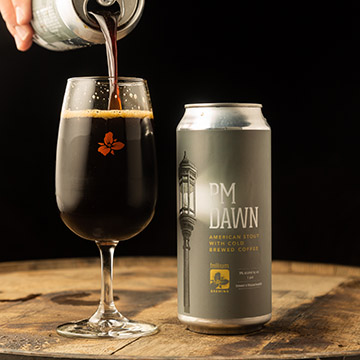
Trillium Brewing Co.’s PM Dawn Clone (+ Coconut Variant)
(5 gallons/19 L, all-grain)
OG = 1.119 FG = 1.050
IBU = 25 SRM = 70 ABV = 9.1%
Ingredients
13.3 lbs. (6 kg) light Munich malt
4.8 lbs. (2.2 kg) North American 2-row malt
1.8 lbs. (0.8 kg) flaked wheat
1.3 lbs. (0.6 kg) English chocolate malt
1.3 lbs. (0.6 kg) English crystal malt (45 °L)
11 oz. (310 g) Simpsons DRC® malt
8 oz. (225 g) Simpsons brown malt
8 oz. (225 g) English black malt
8 oz. (225 g) English crystal malt (35 °L)
8 oz. (225 g) Weyermann melanoidin malt
5 oz. (140 g) Weyermann Carafa® Special Type II
5 oz. (140 g) English roasted barley
8.4 AAU (any moderate alpha hop) (60 min.) (1.2 oz./34 g at 7% alpha acids)
3.5 oz. (100 g) coarse ground coffee
1 g Whirlfloc (15 min.)
1 tsp. yeast nutrients
Favorite characterful, attenuative British yeast
¾ cup corn sugar (if priming)
Step by step
This recipe uses a “soft water” profile. If you have high total alkalinity or high mineral content water, dilute back with reverse osmosis or distilled water. Add small quantities of calcium carbonate back into the mash to buffer the acidity of the roasted grains.
Add all of the crushed grains to the mash tun and mash at 160 °F (71 °C). Add rice hulls to the mash if you struggle to lauter imperial stouts. Mash out, collecting 6.5 gallons (24.5 L) of wort. Boil for 60 minutes. Add the hops at the start of the boil and the Whirlfloc and nutrients in the last 15 minutes.
When the boil is complete, take note of the knockout pH to assess if more calcium carbonate or *small* amount of sodium bicarbonate is needed to soften roasted malt acidity. Chill wort to 66 °F (19 °C). Pitch lots of yeast and oxygenate the wort if using liquid yeast. On day two, allow the temperature to free rise to 72 °F (22 °C). When fermentation appears nearly complete, allow the fermenter to reach room temperature to ensure yeast stays active.
After two weeks at terminal gravity, bag the coffee and place it in a sanitized, purged keg, and then rack the beer on top. After 24–36 hours (based on taste), rack the beer off of the coffee into another sanitized and purged keg, and cold crash to 30 °F (-1 °C). Carbonate to 2.4 volumes. Plan to cold condition at 30 °F (-1 °C) for at least 30 days. Do not move/disturb. Pour out trub from the faucet every two days starting at day 30 until no more is pulled through.
Coconut Variant:
Trillium uses this base PM Dawn recipe for a number of variants, including one of our favorites — Coconut PM Dawn. To brew that beer, follow all of the same recipe instructions, but after racking off the coffee, add the following ingredients in bags to the keg the beer is racked to:
1.5 lbs. (0.68 kg) toasted unsweetened coconut flakes
8 oz. (225 g) toasted sweetened coconut flakes
8 oz. (225 g) untoasted coconut chips
Trillium recirculates the beer in their tanks for full coconut extraction. To mimic this on a homebrew scale, pick up and invert the keg 5–6 times daily over the course of a week while the beer conditions on the coconut. After a week, transfer slowly into the final keg to get as much beer out of the coconut as possible. Proceed with the cold conditioning described in the PM Dawn recipe.
Tips for Success:
It is not advised to brew an extract version of this recipe due to the grain bill. The hop variety is not very important in this recipe, though JC recommends using one with moderate alpha acids (6–9%) to help layer in texture.
Trillium uses a custom roast coffee blend from Barrington Coffee Roasting Co., though JC suggests Barrington’s Commonwealth, Monsooned Malabar, and Kalledevalapura are all good options. They use a coarse grind (i.e., French press or a number 8 grind) ideally ~1 week after roasting to off-gas less desirable volatile compounds (yes, JC says coffee can be too fresh). If using whole bean, double the amount of coffee used and allow the beer to sit on the whole beans 3–5 days.
Even More Recipes . . .
In addition to the five clone recipes on the following pages, JC has shared three more Trillium clones with BYO over the years. Check out our archive for homebrew versions of:


