Time’s running out to get expert feedback on your homemade ciders and meads in the world’s largest competition for home winemakers (run by BYO’s sister magazine). Entry deadline is March 13. Click here for competition info!

video

New to Brew: Cleaning & Sanitation

There are many kinds of brewers, from extract brewers making their beer in five-gallon (19 L) buckets to commercial brewers making their beer in multi-story fermenters. The skills these brewers need and the procedures they use vary substantially. However, there are two skills that every brewer needs, no matter what size brewery they brew in: cleaning and sanitizing.

Cleaning and sanitizing your brewing equipment is the first step listed in the procedure on brew day. Your brewing equipment needs to be as clean and as free from biological growth as possible. The only organism you want growing in your fermenter is yeast. Growth of other organisms in unfermented beer (called wort) can spoil the resulting beer. Contaminated beer may turn out sour or develop other off flavors and aromas. In addition, the beer may overcarbonate and gush when opened. In extreme cases, your bottles may explode.
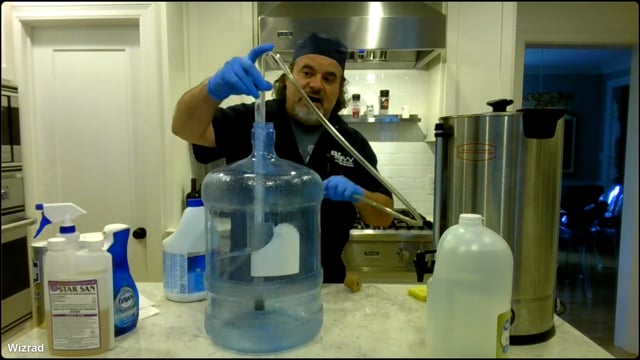
Man in a kitchen with beer brewing equipment and cleaning products.

You might also like…

Man in kitchen with beer brewing equipment. video

New to Brew: Your First All-Grain Batch

Brewing beer from all-grain takes significantly more time than brewing an extract beer. Some of the extra time comes from added steps in the

video

New to Brew: Tips for a Good Fermentation

Learn the keys to running a good homebrew fermentation from adding enough yeast to keeping the right temperatures to help your beer be the b

video

Corny Keg Cleaning

Man demonstrates how to use a hydrometer. video

New to Brewing: Using & Calibrating a Hydrometer

Hydrometers are simple devices that rely on a precise weight to measure the density of the solution it’s floating it. In a solution of pu