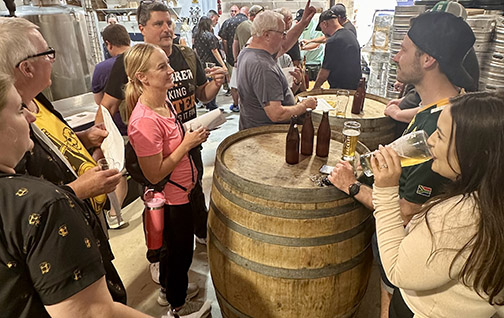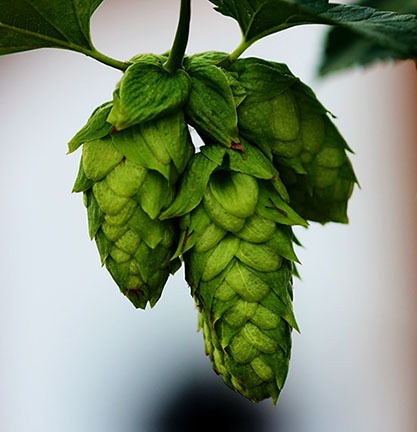
Vera-palooza
In case you haven’t been reading about the release of the new hop variety Vera yet, it’s time to learn what the fuss is about. There are several reasons why the greater brewing community is celebrating its arrival. In fact, it has been so well received that the 2025 Great American Beer Festival (GABF) gave Vera its own entry category.
Vera is a fairly low-alpha acid hop, clocking in on average at 5.5%, but it packs a punch for brewers. Here at BYO, we thought it worthy of real estate to give this new hop in town its due since it’s remarkable on several fronts.
Public Space
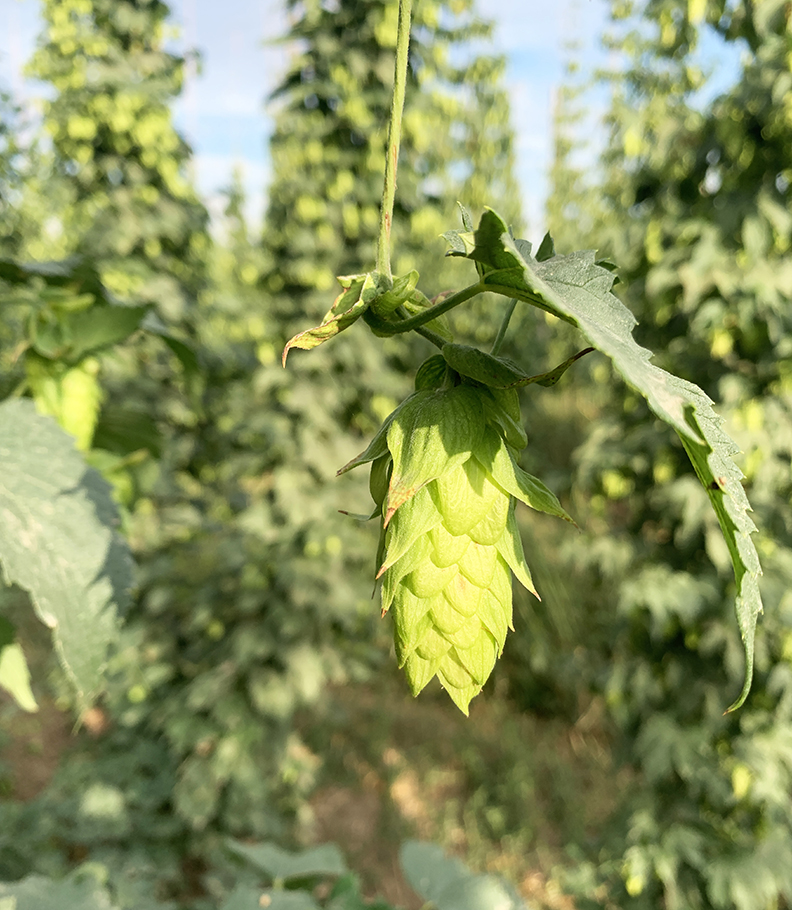
It’s not every year a hop is released with the general hoopla that has been afforded to Vera. The first thing you may notice is that when we use the variety’s name, officially USDA-ARS Vera, you don’t see a ™ or ® symbol after it. That’s notable because it means it’s public and homebrewers — and anybody else — can grow Vera themselves.
Generally, you can tell which hop varieties are public and which are private not just by whether a symbol is found after the name in packaging or articles, but also by those that you can buy rhizomes or plantings of from homebrew stores and online retailers. Varieties like Cascade, Nugget, Zeus, Willamette, Golding, and Hallertauer are popular examples of hop cultivars that were released prior to the privatization of many hop breeding programs. These varieties are found in the public space, and anyone can grow and/or propagate them. Most of the new, fashionable aroma hops on the market these days are private, and therefore off-limits to the public, with the exception of their use in brewing.

USDA-ARS Vera was released in the summer of 2025 by the USDA-ARS (United States Department of Agriculture – Agricultural Research Service) program. This is a U.S. government-run agency that develops all kinds of new crops, not just hops. But that alone doesn’t do the agency service since they cover so much more than that — they’re everything agriculture: Animal protection, food safety, crop production, sustainable agriculture; just to name a few key responsibilities. They have many branches that help drive the future in food (and drink) culture.
The hop was named after Vera Katherine Charles, a pioneering scientist who joined the USDA in 1903 and studied fungi with the department for 40 years. She was one of the first female scientists hired by the U.S. Department of Agriculture and was not only an expert in fungal diseases of plants and animals, but also was an important figure in the general field of mycology, publishing a book titled Some Common Mushrooms and How to Know Them.
But back to the hop Vera . . . it was the first release from scientist Kayla Altendorf’s lab at the USDA-ARS in Prosser, Washington. In an interview with Kayla, she writes, “This is our group’s first hop cultivar release. Vera was the result of a cross made in 2011 by the former hop breeder at Washington State University (WSU). WSU gave access to USDA-ARS to a large collection of hop breeding material that was formerly part of their breeding program in about 2018. Since 2020, USDA-ARS has had breeding activities at WSU in Prosser, Washington, and has continued to evaluate the material, make crosses, and develop and advance new lines.”
Let’s Get Tropical
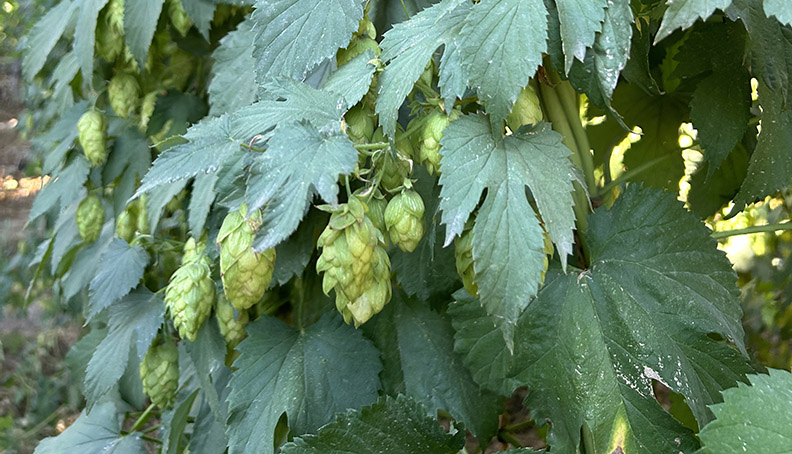
If you read the variety’s aroma descriptors, most hop lovers will be licking their chops. Tropical fruit (mango and pineapple), stone fruit (peach and apricot), and citrus (orange and grapefruit) aromas come bouncing out of the beer glass upon pouring a finely made IPA with Vera hops. Onion and garlic were also noted in some examples, but in much more subtle amounts qualitatively. The aromatics from the hop cones are a key reason Vera became a standout during the extensive selection process. According to Kayla, “The plant was evaluated for several years and eventually gained traction within the Brewers Association sensory evaluation program called HopSource where it repeatedly ranked in first place.”
In a paper in the Journal of Plant Registrations, Kayla and her team stated, “On average, across three experimental beers, the most common descriptors selected were tropical (50% frequency), citrus (48%), stone fruit (48%), and floral (45%). In the analysis of free-form comments, the top descriptors were fruit, tropical, and citrus, which were relatively consistent across dried hops and beer.”

Russian River Brewing Co., based in Windsor, California, won silver at the 2025 GABF in the Vera-themed beers category with their RnD West Coast Pils #7. We talked with Owner and Brewmaster Vinnie Cilurzo about their recipe design and use of Vera in this beer (the recipe that he generously shared with homebrewers can be found near the end of this article.)
Vinnie states, “The RnD West Coast Pils #7 was the first time I had brewed with Vera. The hop itself has tropical fruit notes with citrus undertones. In the beer, I’d say the tropical fruit was more prominent while the citrus was milder, but definitely still there.”
He continues to say, “RnD West Coast Pils #7 used about 80% Vera with a little Thora and NZH-109, all being tropical driven hops. The Vera was added at 15 minutes to go in the boil as well as in the whirlpool where I conducted a coolpool technique, which was at around 190 °F (88 °C). On the cold side the beer was dry hopped at a rate of 2 lbs./bbl (0.9 kg/bbl) with 80% of the dry hops being Vera and the remaining 20% split between Thora and NZH-109.”
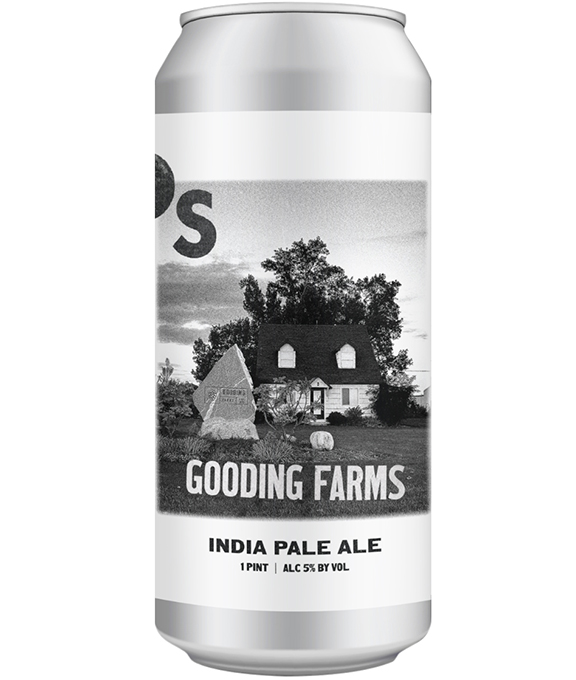
Winning gold at the 2025 GABF in the Vera category was Offset Bier Co., based out of Park City, Utah, with their Gooding Farms session IPA. The name of the beer is a nod to the Idaho farm that helped cultivate Vera for Kayla and her team (homebrewers may already be familiar with Gooding Farms as the family-owned farm that developed the hop Idaho Gem™). In the gold medal-winning beer, Offset Bier Co.’s Founder and Brewer Conor Brown said they used the hop heavily as a dry hop addition, in part because of its higher cohumulone content and not wanting excessive bitterness. While they haven’t been able to get as much Vera hops in previous years as they would like, this wasn’t Offset’s first experience with Vera.
“We’ve brewed three beers with Vera so far. We brewed a 6% XPA called Guest Experience paired with Amarillo® and Centennial®, the 5% session IPA Gooding Farms (recipe found at the end of this article), and a 6.3% West Coast IPA called Krushing on Vera (50/50 blend of Krush™ and Vera hops),” Brown said.
“To me, what stands out about Vera is this almost candy-like flavor/aroma it has. It’s really bright and punchy out of the bag and in the rub. I don’t get much ‘dank’ character out of it. I kept saying Zebra Stripe gum,” Brown said. “There is also a little bit of underlying spice that comes through. It takes a while for it to come out in the rub and it was hard to detect in the beers, but I think it just adds that hint of balance. Overall, it’s just very bright and punchy, especially for its alpha levels, which are pretty low.”
So how would Brown recommend using Vera?
“I’ve heard a few people mention they think Vera goes better in hazy beers because of the candy/sweetness aspect. I personally would disagree with that,” Brown said. “I’ve only used Vera in clear, hoppy beer and I think honestly that’s where it goes best. I feel like everyone is trying to make West Coast IPA lean more dank, but I think the brightness of this hop pairs better with drier/crisp/clear beers. I don’t think it would be the centerpiece of any such beer, but I think it balances out the more dank-leaning hops really well.”
But Wait, There’s More
One of the key attributes that excited Kayla and her team was the varietal’s disease resistance. Most homebrewers aren’t going to put this as their lead position for a reason to love USDA-ARS Vera, but commercial hop growers may. In particular, it is noted to have a strong resistance to powdery mildew. Folks immersed in the agricultural world are likely aware of this disease’s pestilence impacts. Powdery mildew has an ability to overwhelm a plant and can be disastrous to many years’ harvests if not handled appropriately, which can be time consuming when treating large fields. Vera was bred with parental genes from Brewers Gold, a wild Manitoba hop, and a native North American hop species that placed specific genetic coding in its DNA that is highly resistant to key fungal mildew species. The result has shown Vera’s resistance to the various fungal strains tested to be remarkable. In controlled environment testing, Vera also performed better than Nugget and Pacific Gem, and similar or slightly worse than Cascade, in small field trials in Oregon against downy mildew, but more observations are needed to determine its true downy mildew tolerance.
Mildews can be fought with sulfur treatments, but tall hop bines are not easily treated by hop growers, especially amateur growers, due to their height. Having embedded DNA to fight these diseases is highly advantageous to assure harvest will not be hindered by these common diseases.
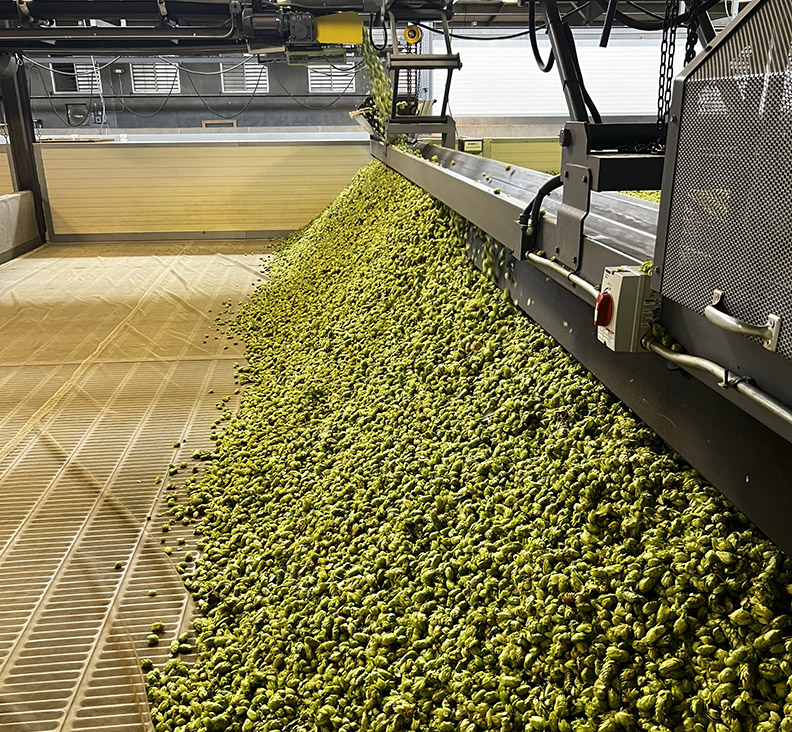
For those that can obtain Vera plantings with the intent to grow their own, Kayla advised, “In both on farm trials and in small plots at our experiment station, Vera had low yields in the first year and new growers should anticipate similar outcomes in the first year of establishment. In our small plots, Vera yielded similarly to Cascade in its second year once established.” Those second-year yield numbers ranged from 1,500–2,700 lbs./acre.
Considering that Cascade has traditionally been one of my best performing hop bines in my backyard plantings in the northeastern U.S., this has me encouraged.
Public Domain Pipeline
The USDA-ARS program development pipeline was just warming up with the summer release of Vera. In November 2025, they released a second hop that was greeted with similar excitement in the brewing world called Thora. Russian River Brewing Co.’s silver medal-winning RnD West Coast Pils #7 included some Thora because of its strong tropical-fruit character.
Regarding the future of the USDA-ARS hop breeding program, Kayla said, “Every year our lab develops thousands of new hop seedlings. We select about 30 every year to be included in larger plots. We’ve been doing this since 2021 and we have several lines that we are pursuing in experimental brewing trials and in larger plots. We select for disease-resistance (downy and powdery mildew), yield, alpha and aroma, cone shape and size, and agronomic performance. We have several in the works that meet our standards for selection and advancement. Our lab also conducts research on hop breeding methods, which tie directly in with our breeding efforts. The timeline for releasing a new hop cultivar has historically been about 13 years. We hope to decrease that time by implementing new techniques to improve selection, but still the vetting process for new lines takes time and experimentation. Stay tuned!”
Russian River Brewing Co.’s RnD West Coast #7 Pils clone, All-Grain
(5 gallons/19 L, all-grain)
OG = 1.051 FG = 1.008
IBU = 41 SRM = 3 ABV = 5.8%
Ingredients
9.5 lbs. (4.3 kg) Pilsner malt
8 oz. (230 g) wheat malt
8 oz. (230 g) flaked barley
9.6 AAU Simcoe® hops (or similar clean bittering hop) (60 min.) (0.75 oz/21 g at 12.5% alpha acids)
0.75 AAU Vera hops (30 min.) (0.15 oz./4 g at 5.4% alpha acids)
2 AAU Vera hops (15 min.) (0.4 oz./11 g at 5.4% alpha acids)
1.5 oz. (43 g) Vera hops (whirlpool)
0.4 oz. (11 g) Thora hops (whirlpool)
4.1 oz. (116 g) Vera hops (dry hop)
1 oz. (26 g) Thora hops (dry hop)
SafLager W-34/70, Wyeast 2124 (Bohemian Lager), or White Labs WLP830 (German Lager) yeast
¾ corn sugar (if priming)
Step by step
This recipe uses reverse osmosis (RO) water. Adjust brewing water to assure a soft water profile with an acid such as phosphoric or citric if using harder water.
Mash the grains in 3.75 gallons (14.2 L) of water at 146 °F (63 °C) for 60 minutes. Mash out at 172 °F (78 °C) for 10 minutes to promote a dry beer. Vorlauf until the wort is clear and then run off into the kettle. Sparge grains with ~4 gallons (15 L) of 168 °F (76 °C) water to collect 6.5 gallons (25 L) in the kettle. Boil wort for 60 minutes, adding water if needed to bring back up to pre-fermentation volume (5.5 gallons/21 L).
After the boil, cool wort to 190 °F (88 °C) and add the whirlpool hops while stirring to create a whirlpool. Cover kettle and let sit 20 minutes before proceeding to cool the wort to 52 °F (11 °C). Pitch yeast, allowing temperature to rise to 58 °F (14 °C) during fermentation. As fermentation is nearing completion, raise temperature to 68 °F (20 °C) for a diacetyl rest for 2 days.
After primary and secondary fermentation are complete, add the dry-hop additions. Three days later, remove dry hops (if possible) and chill the beer for seven days. Then bottle condition or keg and force carbonate as usual.
Russian River Brewing Co.’s RnD West Coast #7 Pils clone, Extract
(5 gallons/19 L, extract only)
OG = 1.051 FG = 1.008
IBU = 41 SRM = 3 ABV = 5.8%
Ingredients
6 lbs. (2.7 kg) Pilsner liquid malt extract
0.5 lb. (0.23 kg) wheat dried malt extract
9.6 AAU Simcoe® hops (or similar clean bittering hop) (60 min.) (0.75 oz/21 g at 12.5% alpha acids)
0.75 AAU Vera hops (30 min.) (0.15 oz./4 g at 5.4% alpha acids)
2 AAU Vera hops (15 min.) (0.4 oz./11 g at 5.4% alpha acids)
1.5 oz. (43 g) Vera hops (whirlpool)
0.4 oz. (11 g) Thora hops (whirlpool)
4.1 oz. (116 g) Vera hops (dry hop)
1 oz. (26 g) Thora hops (dry hop)
SafLager W-34/70, Wyeast 2124 (Bohemian Lager), or White Labs WLP830 (German Lager) yeast
¾ corn sugar (if priming)
Step by step
Starting with 6 gallons (23 L) of water, heat up to about 180 °F (82 °C) and stir in the dried malt extract. Be sure to stir until all extract is dissolved and no clumps remain. Bring wort to a boil, adding the first hop addition once a steady boil is achieved. Boil wort for 60 minutes, adding water if needed to bring back up to pre-fermentation volume (5.5 gallons/21 L).
Follow the remainder of the all-grain recipe instructions.
Recipe Note: As stated in the article, Russian River actually used equal parts Thora and a New Zealand experimental hop called NZH-109 (in addition to larger additions of Vera), in the whirlpool and dry hop. Because NZH-109 is not currently widely available on the homebrew market, we’ve substituted Thora for the relatively small NZH-109 additions. Though if you are able to buy NZH-109, replace half of each Thora addition with it.
Offset Bier Co.’s Gooding Farms clone, All-Grain
(5 gallons/19 L, all-grain)
OG = 1.051 FG = 1.012
IBU = 55 SRM = 4 ABV = 5%
Gooding Farms is a sixth-generation woman-owned and operated hop farm in Parma, Idaho. This beer highlights the newest public variety Vera as well as Gooding Farms Citra® and Idaho Gem™. While only 5% ABV, you’d never know by drinking it. Packed with hop flavor and aroma and full on the palate this session IPA punches well above its weight.
Ingredients
6.5 lbs. (3 kg) Great Western Idaho Pilsner malt
2 lbs. (0.9 kg) Great Western 2-row malt
1 lb. (0.45 kg) German pale ale malt
13 oz. (0.36 kg) rye malt
3 oz. (85 g) crystal malt (15 °L)
½ mL Flex® hop extract (or similar clean bittering hop extract) (90 min.)
3.2 AAU HBC 682 hops (60 min.) (0.18 oz./5 g at 18% alpha acids)
10 AAU Citra® Incognito® (10 min.) (0.2 oz./5 g at 51% alpha acids)
1.9 oz. (53 g) Idaho Gem™ hops (whirlpool)
0.8 oz. (22 g) Citra® hops (whirlpool)
4 oz. (113 g) Vera hops (dry hop)
2 oz. (56 g) Citra® hops (dry hop)
0.66 oz. (19 g) Idaho Gem™ hops (dry hop)
SafAle US-05, Wyeast 1056 (American Ale), or White Labs WLP001 (California Ale) yeast
¾ corn sugar (if priming)
Step by step
This recipe uses reverse osmosis (RO) water. Adjust brewing water to assure a soft water profile with an acid such as phosphoric or citric if using harder water.
Mash the grains in 4 gallons (15 L) of water at 154 °F (68 °C) for 45 minutes. Mash out at 162 °F (72 °C) for 20 minutes. Vorlauf until the wort is clear and then run off into the kettle. Sparge grains with ~3.5 gallons (13 L) of 168 °F (76 °C) water to collect 6.5 gallons (24.6 L) in the kettle. Boil wort for 90 minutes, adding hops additions per ingredients list.
After the boil, add water to bring up to fermentation volume (5.5 gallons/21 L) and cool wort to 180 °F (82 °C). Add the whirlpool hops while stirring to create a whirlpool. Cover kettle and let sit 20 minutes before proceeding to cool the wort to 62 °F (17 °C). Pitch yeast, allowing temperature to rise to 64 °F (18 °C) during fermentation. As fermentation is nearing 60% completion, raise temperature to 68 °F (20 °C).
After fermentation is complete, dump or rack off yeast, and cool to 58 °F (14 °C). Add dry hops, then rouse with a shot of CO2 gas after 18 hours to break up any rafts that form. Wait 24 hours then begin a ramp down to packaging temperature over the course of a week. Condition for one week at near or slightly below freezing. Bottle condition or keg and force carbonate as usual.
Offset Bier Co.’s Gooding Farms clone, Partial Mash
(5 gallons/19 L, partial mash)
OG = 1.051 FG = 1.012
IBU = 55 SRM = 4 ABV = 5%
Ingredients
4.7 lbs. (2.1 kg) Pilsen dried malt extract
1 lb. (0.45 kg) German pale ale malt
13 oz. (0.36 kg) rye malt
3 oz. (85 g) crystal malt (15 °L)
½ mL Flex® hop extract (or similar clean bittering hop extract) (90 min.)
3.2 AAU HBC 682 hops (60 min.) (0.18 oz./5 g at 18% alpha acids)
10 AAU Citra® Incognito® (10 min.) (0.2 oz./5 g at 51% alpha acids)
1.9 oz. (53 g) Idaho Gem™ hops (whirlpool)
0.8 oz. (22 g) Citra® hops (whirlpool)
4 oz. (113 g) Vera hops (dry hop)
2 oz. (56 g) Citra® hops (dry hop)
0.66 oz. (19 g) Idaho Gem™ hops (dry hop)
SafAle US-05, Wyeast 1056 (American Ale), or White Labs WLP001 (California Ale) yeast
¾ corn sugar (if priming)
Step by step
This recipe uses reverse osmosis (RO) water. Adjust brewing water to assure a soft water profile with an acid such as phosphoric or citric if using harder water. Place grains in a muslin bag and loosely tie off.
In a small stock pot, start with 1 gallon (3.8 L) of water, heat up to about 162 °F (72 °C). Add the grains and try to stabilize the mash temperature between 148–156 °F (64–69 °C). After mashing the grains for 45 minutes, transfer the liquid wort to a large stock pot and place grain bag in a colander above the big stock pot. Proceed with washing the grains with 1 gallon (3.8 L) of hot water. After, add hot water to bring total volume up to 6.5 gallons (24.5 L) then stir in the dried malt extract. Be sure to stir until all extract is dissolved and no clumps remain. Bring wort to a boil, adding the first addition of hop extract once a steady boil is achieved. Boil wort for 90 minutes, following the all-grain recipe for boil, whirlpool, fermentation, dry hopping, and packaging instructions.