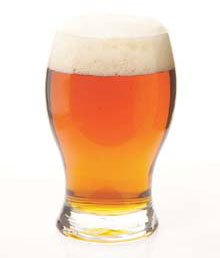
Bateman’s XXXB Bitter clone
Bateman’s XXXB Bitter won Gold in the Premium Bitter/Special Bitter/Strong Bitter category in 1986, 1987, 1988, 1989 and 1997. It is described as “A brilliant blend of malt, hops and fruit on the nose with a bitter bite over the top of a faintly banana maltiness that stays the course. A russet-tan brown classic.”
From this I would suggest a yeast that provides a fruity character. The data I have for this beer is: OG: 1.048–1.049. Malt bill: 72–87% Pipkin or Maris Otter pale malt, 7.5–12% crystal malt, 0–3% wheat flour, 15–18% invert sugar. Hops: Challenger, Goldings. IBU: 37. EBC: 40–42.

Bateman’s XXXB Bitter clone, all-grain
(5 gallons/19 L, all-grain)
OG = 1.049 FG = 1.012
IBU = 37 SRM = 12 ABV = 4.8%
Bateman’s XXXB Bitter won Gold in the Premium Bitter/Special Bitter/Strong Bitter category in 1986, 1987, 1988, 1989 and 1997. It is described as “A brilliant blend of malt, hops and fruit on the nose with a bitter bite over the top of a faintly banana maltiness that stays the course. A russet-tan brown classic.” From this I would suggest a yeast that provides a fruity character. The data I have for this beer is: OG: 1.048–1.049. Malt bill: 72–87% Pipkin or Maris Otter pale malt, 7.5–12% crystal malt, 0–3% wheat flour, 15–18% invert sugar. Hops: Challenger, Goldings. IBU: 37. EBC: 40–42.

Ingredients
7.0 lbs. (3.2 kg) Pipkin or Maris Otter pale malt
15 oz. (425 g) crystal malt (60 °L)
1.25 oz. (35 g) wheat flour
1 lb. 3 oz. (538 g) invert sugar
6 AAU Challenger hops (90 min.) (0.75 oz./21 g of 8% alpha acid)
2.5 AAU East Kent Goldings hops (90 min.) (0.50 oz./14 g of 5% alpha acid)
2 AAU Challenger hops (10 min.) (0.25 oz/7.1 g of 8% alpha acid)
2.5 AAU East Kent Goldings hops (10 min.) (0.5 oz./14 g of 5% alpha acid)
1 tsp. Irish moss (15 min.)
White Labs WLP022 (Essex Ale), White Labs WLP005 (British Ale), Wyeast 1099 (Whitbread Ale) or Wyeast 1318 (London Ale III) yeast
Step by Step
Mash grains (and flour) at 154 °F (68 °C) for 60 minutes. 90-minute boil time, with sugar addition in the last 15 minutes of boil. Ferment at 70–72 °F (21–22 °C).
Bateman’s XXXB Bitter clone, extract with grains
(5 gallons/19 L, extract with grains)
OG = 1.049 FG = 1.012
IBU = 37 SRM = 12 ABV = 4.8%
Ingredients
0.75 lbs. (0.34 kg) Muntons Light dried malt extract
3.3 lbs. (1.5 kg) Muntons Light liquid malt extract (late addition)
1.0 lb. (0.45 kg) Pipkin or Maris Otter pale malt
15 oz. (425 g) crystal malt (60 °L)
1.25 oz. (35 g) wheat flour
1 lb. 3 oz. (538 g) invert sugar
6 AAU Challenger hops (90 min.) (0.75 oz./21 g of 8% alpha acid)
2.5 AAU East Kent Goldings hops (90 min.) (0.50 oz./14 g of 5% alpha acid)
2 AAU Challenger hops (10 min.) (0.25 oz/7.1 g of 8% alpha acid)
2.5 AAU East Kent Goldings hops (10 min.) (0.5 oz./14 g of 5% alpha acid)
1 tsp. Irish moss (15 min.) White Labs WLP022 (Essex Ale), White Labs WLP005 (British Ale), Wyeast 1099 (Whitbread Ale) or Wyeast 1318 (London Ale III) yeast
Step by Step
Steep crushed grains and flour in 3 qts. (~3 L) of water at 154 °F (68 °C) for 45 minutes. Combine “grain tea,” water and dried malt extract to make 3.0 gallons (11 L) of wort. Boil for 90 minutes, adding sugar and liquid malt extract in last 15 minutes of the boil. Ferment at 70–72 °F (21–22 °C)