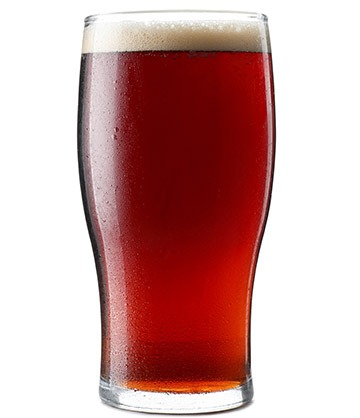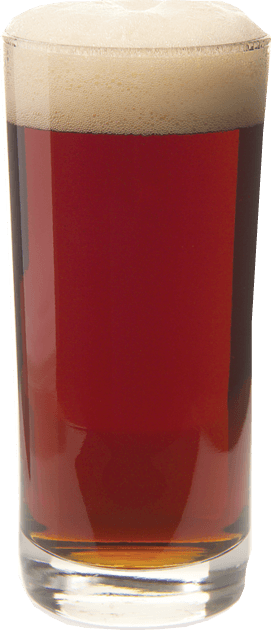
Terje Raftevold’s kornøl (Northwest Norwegian farmhouse ale)
Terje Raftevold’s kornøl (Northwest Norwegian farmhouse ale)
(5 gallons/19 L, all-grain)
OG = 1.075 FG = 1.018 IBU = 0 SRM = 5 ABV = 7.5%
Ingredients
7.7 lbs. (3.5 kg) pale malt
7.7 lbs. (3.5 kg) Pilsner malt
4.5 AAU Saaz hops (0 min.) (1.6 oz./45 g at 2.8% alpha acids)
3–4 juniper branches (the tips, with berries on, if possible)
Kveik yeast (Escarpment Labs, ideally) or bread yeast
Step by Step
Lay 2–3 juniper branches in the bottom of the mashtun, then the milled malts on top. Make a juniper infusion with the last branch, with about 8-gallons (30.3-L) water brought to a boil. Mash in with juniper infusion, targeting 165 °F (74 °C) mash temperature initially with about 5.75 gallons (21.9 L), stir well, leave it 1–1.5 hours. At the end, temperature should still be 158 °F (70 °C). Sparge by adding the remaining hot juniper infusion. Let the wort run through a bag containing the hops. Cool the wort to 86 °F (30 °C), then pitch the yeast. Ideally you should make a starter with the first wort and let the sparging go on for a few hours (Terje brews 32 gallons/120 L at a time).
If fermenting with kveik, let it ferment 48 hours. With American bread yeast, 72 hours. Store cool, in a keg with spunding-valve. By controlling the storage temperature you can control the amount of post-fermentation, which will affect sweetness and also the level of carbonation. Fermented with kveik yeast, the beer is ready to drink after 48 hours.

Tips For Success: I realize a lot of the numbers sound absurd, but that’s really the temperatures and times these people use. I’ve brewed Terje’s recipe 3–4 times, and 165 °F (74 °C) and short fermentation really does give the best results.
During the mash, be sure to stir well so that all lumps are broken up, allowing the hot water to pasteurize the malts completely. Don’t shorten the mash, because you need the time to make sure everything is pasteurized.
Remember there is no cold-side, so you really have to sanitize the mashtun, filter, juniper branches, and everything that’s used during mash and lautering. Yes, pasteurization should, in theory, take care of it, but in practice raw ale brewers are very careful with sanitation. Terje dips the juniper branches in boiling juniper infusion, for example.